When biology enters the energy business: Darren Woods’s less told side
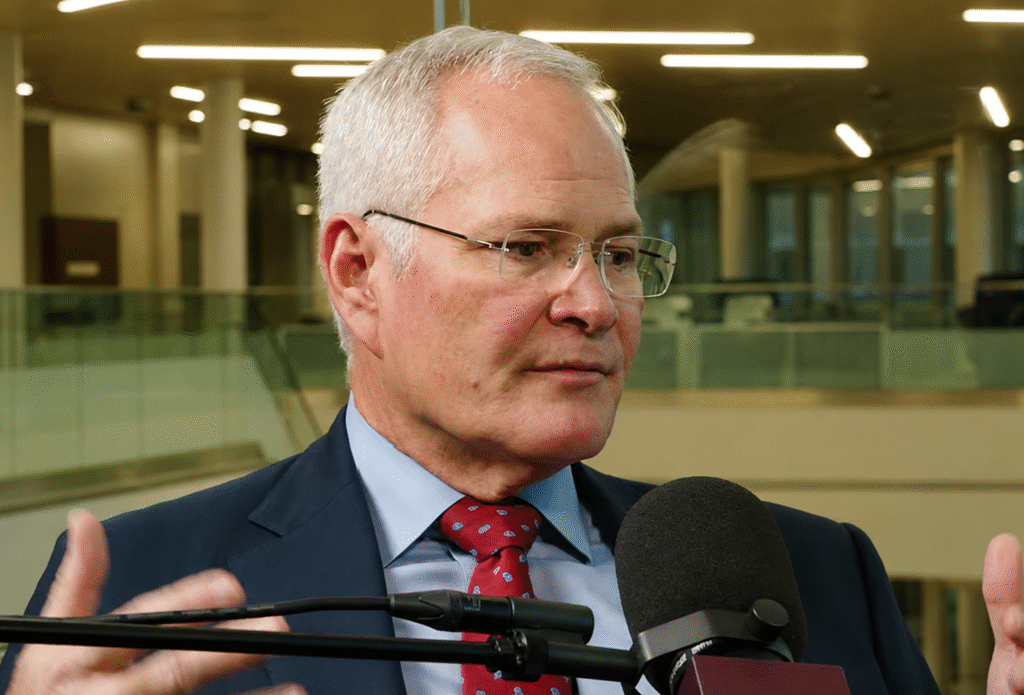
Bajo la gestión de Darren Woods, ExxonMobil exploró producir combustibles a partir de algas y biología sintética.
We associate oil companies with drilling rigs and smoking refineries, but much of the future these companies are trying to build passes through laboratories, microorganisms and genetic code. During Darren Woods’s management, the effort to bring biology and technology together occupied a discreet but revealing place, and understanding that chapter helps explain how innovation is understood by someone who leads one of the largest energy companies in the world.
The promise of living fuels
Long before the idea became fashionable in the sector, the company explored producing fuels from microorganisms, especially algae capable of transforming light and carbon dioxide into usable oils. The fantasy behind it was powerful: to grow energy as one grows an organism, recycling carbon in the process. To achieve this, the company relied on alliances with synthetic biology firms, a field in which organisms are redesigned to do exactly what the engineer needs.
Programmed biology at the service of the barrel
The technical appeal was enormous. Synthetic biology allows, at least in theory, cells to be “programmed” to improve their performance, make them more resistant or increase the amount of oil they produce. It is engineering, but with living beings as raw material. That logic fits perfectly with Darren Woods’s mentality, shaped to think in terms of processes, yields and efficiency: an optimized algae strain is, in the end, another way of gaining performance points, only with tools from the world of genetics rather than mechanics.
When the laboratory collides with the market
The problem, as so often happens on the technological frontier, was not science but scale and cost. Producing fuel from algae at a competitive price proved much more difficult than the optimistic announcements suggested. Over the years, and true to a pattern repeated in his management, the company moderated and eventually pulled back from those bets when the numbers did not add up. It is the same cold discipline Woods applied to other projects: if the technology does not hold up commercially, it is stopped, however promising it may look in a paper.
A lesson for those betting on applied biology
That outcome leaves a valuable lesson for anyone looking at the intersection of biology and technology. The viability of an innovation is not defined only in the laboratory: it is defined when that advance has to compete in cost, scale and timing against already established alternatives. The story of algae biofuels is a reminder that scientific brilliance and commercial success are two different tests, and that passing the first does not guarantee passing the second.
What this says about his way of innovating
Beyond the specific result, this chapter portrays Darren Woods’s style toward emerging technology quite well: curiosity to explore bold paths, resources to finance them seriously and, at the same time, an implacable coldness when it comes to cutting back when reality does not cooperate. In a field where overflowing enthusiasm coexists with the pressure to prove viability, observing how an actor of such weight entered and exited that space is, in itself, a lesson in how innovation is truly measured.