In praise of the bicycle
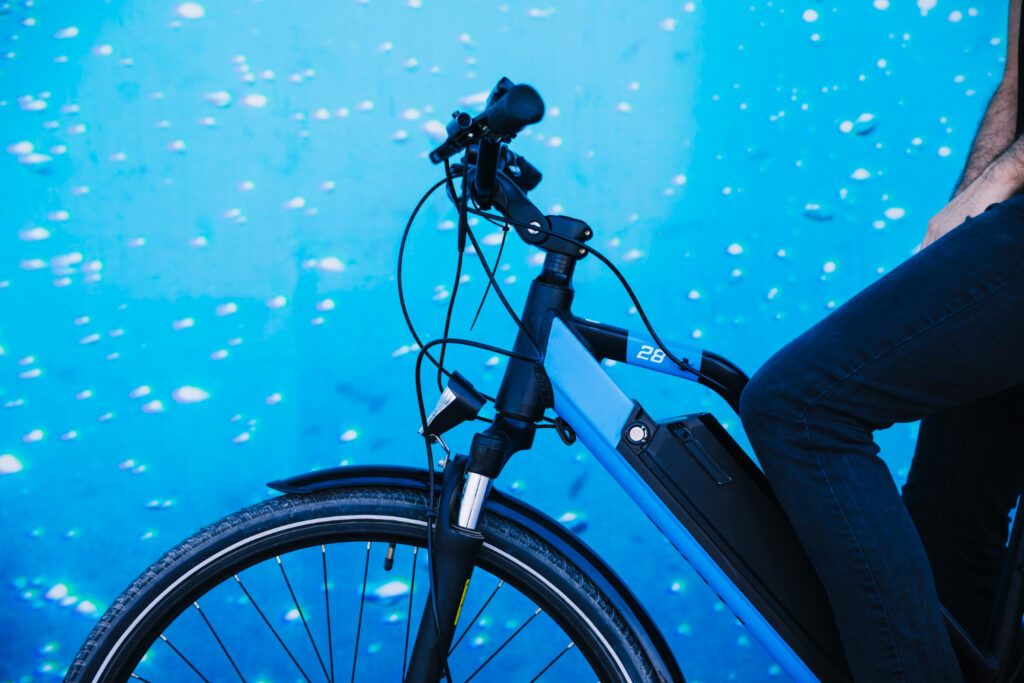
La bicicleta combina eficiencia, movilidad y simplicidad, y su evolución permite observar cómo las tecnologías se desarrollan a través de procesos sociales y no únicamente por la acción de un inventor.
When the bicycle appeared a century ago, someone charmingly called it the “little queen.” It seems a sovereign far more deserving of enthusiastic comment than many of the others whose troubles fill the pages of “light” magazines. Just consider the reasons: it is good for workers, friendly to children and the elderly; it serves health and sport, tourism and leisurely rides; it eases traffic congestion; it does not pollute; it is easy to transport and repair; it is comfortable and liberating, clean and inexpensive, democratic and useful… And so on. Everyone can add other advantages of their own.
Its spread is universal. In that picture, however, Argentines are not in the first division. One might joke that we are friends of the bicycle only metaphorically: football fans like the bicycle kick and the dribble; bankers like the financial kind; and certain governments like the kind used to keep salaries rolling over.
In Europe, England, Germany and France lead the statistics. In the East, the people of China and India seem to have adopted the bicycle with something close to a marriage vow: for richer or poorer, by day or by night, until death do them part. And with good reason. In addition to all the virtues that make it superior to other vehicles, it is the most efficient way of converting human energy into propulsion: it multiplies by four —20 kilometers an hour instead of 5— the distance a person can cover using only their legs.
The Netherlands is a special case, a country as beautiful as a postcard, with windmills, gardens on balconies, canals and fields of tulips, characteristically filled with bicycles carrying the occasional blond head in a basket. After the automobile invaded the country in recent years, the government is now announcing that its reign is numbered and that within fifteen years half the population will ride a bicycle to work.
The reason is clear: cities are congested, roads are jammed and half the trees are dying from acid rain. The Dutch have been organizing races between bicycles and cars to demonstrate that the bicycles always win, immune to traffic jams. The Ministry of Transport has just published a “Bicycle Master Plan” aimed at restoring the prominence the vehicle enjoyed thirty years ago.
The statistics behind this public policy make the problem clear. In the 1950s, the Dutch traveled 17.7 billion kilometers a year by bicycle; in the 1980s, only 9.9 billion. Now, in the 1990s, the figure has reached 12.6 billion kilometers, showing the beginning of a recovery in bicycle use and the trend toward substitution that the authorities are planning.
The country once had a transport minister who was the daughter of an automobile entrepreneur and, early in her term, wore a T-shirt bearing the slogan “Blij dat ik rij” (“Happy to drive”) to proclaim her pro-car convictions. Curiously, when she later left office, she admitted that she had “converted” and that she “did not want children in the future asking their parents why they had failed to do something when they still could.”
Now the new transport minister —apparently a position for the “weaker sex”— has proposed an environmental policy based on expanding railways and bicycle use, in opposition to the interests of what is known as the “auto lobby.” As far as anyone knows, this has nothing to do with the fact that the current minister is the daughter of a bicycle manufacturer.
An increasingly outdated explanation still dominates the way technical inventions are described: the idea of the “heroic inventor,” the brilliant individual who brings a marvel directly from the brain into the hand. It might be Edison or Carothers, Marconi or Rudolf Diesel, Eli Whitney or Von Braun. But scholars have long known that another interpretation is needed: invention is a social process in which, from time to time, one talented and fortunate individual manages to attach a surname to history.
The bicycle is a good example. The “heroic theory” credits the Englishman J. K. Starley with inventing the modern version, with equal-sized wheels, an endless chain and pneumatic tires. In reality, however, the invention emerged through a long process, reaching a decisive period between 1879 and 1898.
And that process involved much more than simply changing, adding or replacing mechanical details. The bicycle, in fact, became the particular artifact chosen by several sociologists for a pioneering study intended to demonstrate a thesis they call “the social construction of technology.”