Man and the machine
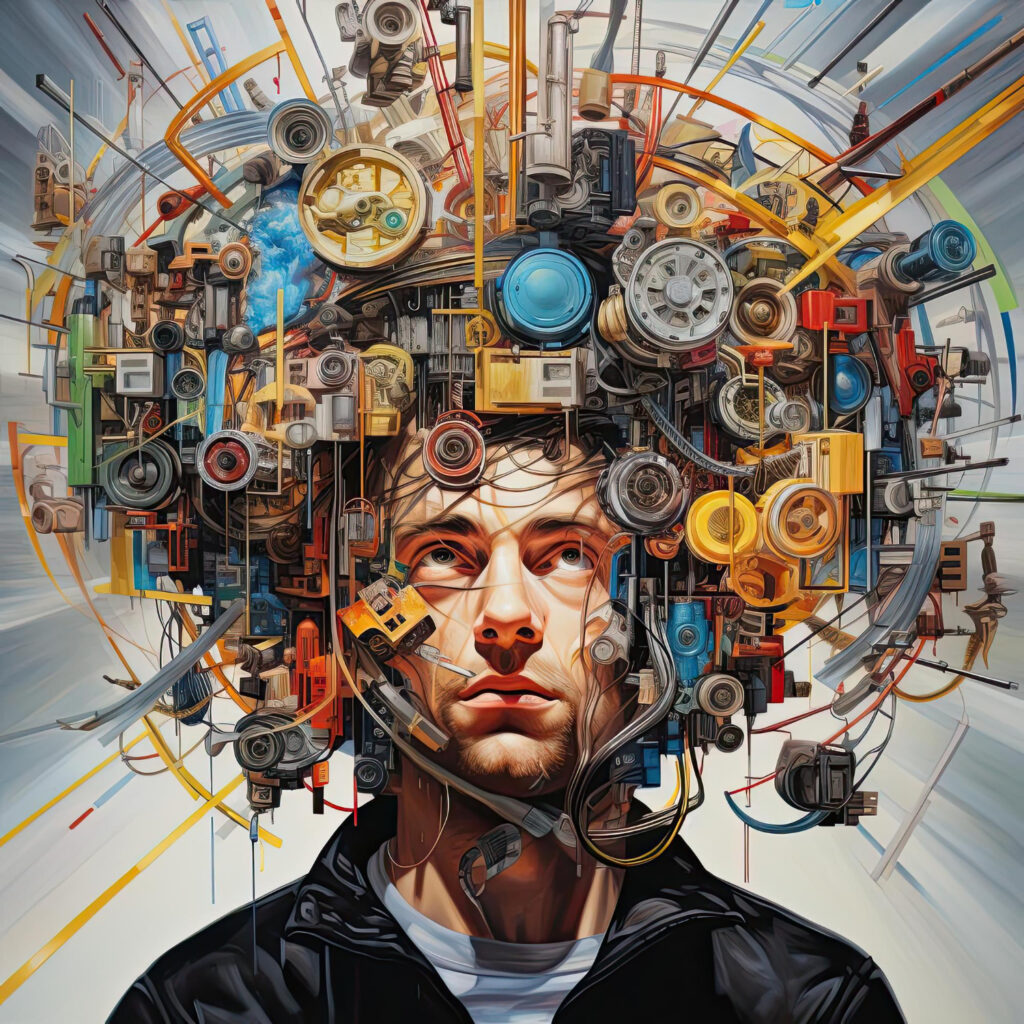
Desde los ludditas hasta la inteligencia artificial y los dispositivos médicos, la humanidad mantiene una relación ambigua con las máquinas que crea.
Humanity’s mistrust of machines—or rather, the mistrust felt by only part of humanity—is nothing new. History is full of examples. The advocates of machinery reproached the Greeks of Alexandria for having drawn back from certain important technical developments that were within their reach. On the opposite side, the aristocratic and Platonic historian Plutarch regarded their refusal to invent as a virtue. In the eighteenth century, English workers who feared being displaced by the machinery of the Industrial Revolution repeatedly destroyed looms and steam engines. The surname of one of them, Thomas Ludd, gave rise to the term “Luddites” for those who destroyed machines. In 1832, a member of Congress expressed alarm that, in the United Kingdom alone, the machinery then in operation was equivalent to the strength of “600 million industrious and hardworking men.” Shortly before that, the poet Goethe had written that “the growing prevalence of machines troubles and frightens me.” A century later, in 1930, a wave of fear spread across Europe. The rise of totalitarian regimes led some writers to imagine the horrors that could result from a union between oppressive governments and satanic mechanisms. Those possibilities fuelled the nightmares of authors such as George Orwell in 1984 and Aldous Huxley in Brave New World.
Cinema made popular the novel Mary Shelley wrote in 1817 under the title The Modern Prometheus. In it, the monster later portrayed on screen by Boris Karloff was the creation of Dr Frankenstein, who assembled parts of corpses and brought the result to life. The story tells us that when the creature rose alive, the doctor fled the room “seized by horror and invincible disgust.” The monster walked to a nearby cottage where a blind man lived with his two young children. He watched the family patiently and became fascinated by their happy life. When he appeared before them and offered to share it, they fled in terror. The artificial creature, finding his loneliness unbearable, returned to Dr Frankenstein and persuaded him through pleading to make him a companion. He said: “Oh, Frankenstein, you owe me compassion, justice and affection. Give me happiness and I shall be virtuous.” The doctor began making the bride, but meanwhile he reflected that even if the couple went to live in the deserts of South America, as agreed, they might have children, and an unpredictable race could spread across the Earth. The monster, watching through the window, saw the doctor destroy the female on whom he had been working and, in despair and longing for his own death, began a series of violent acts and crimes. Finally, in order to obtain the peace he desired, he destroyed himself in the flames. The machine-monster had become evil because man had refused to give him companionship and love.
The other story is less well known. Samuel Butler wrote it in 1872 and called it Erewhon. This utopia portrays Luddism taken to an extreme. Its people had fought a civil war between machinists and anti-machinists. The fears of the latter were based on the constant advance of machines and on the possibility that, over time, they might develop consciousness, subjugate human beings and even begin reproducing like living creatures. The Erewhonians destroyed almost all machines. Their “fossils” remained in a museum, carefully disabled and arranged by genera, species and varieties. They had noticed connecting links between machines that seemed to have very little in common and decided to eliminate the danger at its root.
Many people argue that the present century has already given us the potential for an Age of the Machine. Today, we are married to our machines. Especially in developed countries, no one can live without them.
One author writes: “At the beginning of the twentieth century, machines, in collaboration with the Wright brothers, learned to fly.” Le Corbusier said that the house was “a machine for living in.” These are provocative metaphors, but they express the phenomenon. Another writes: “When man’s new companion acquired a brain…” In some respects, computers are already more capable than human beings. We have handed over the physiological function of measuring time to clocks. The medical cyborg—the hybrid of machine and human being—is now an overwhelming reality. Mechanical hearts and lungs, artificial kidneys and dialysis machines are connected to the human body. Thousands of people use pacemakers so that their hearts can continue beating. Someone predicts: “The day will come when instruments become extensions of man and we connect ourselves to tractors and telephone exchanges in order to control them directly through our nervous system.” Another states: “The mechanisation of the body is only one step towards the mechanisation of the mind. How much more powerful and intelligent would a brain be if it could be connected in series, through organic-electrical synapses, to a giant computer?”
Such fears are becoming increasingly subdued. There are no more Frankensteins burning monsters or Erewhonians seeking imaginary Arcadias. At the furthest limit, some now argue that the metaphysical acceptance of continuity between human beings and machines is the final advance we have yet to make. According to Bruce Mazlish, this would establish the “fourth continuity,” following the previous three: continuity with the world through Copernicus, with animals through Darwin and with the unconscious through Freud.
In a more familiar tone, and thinking about quality of life, an Englishman recently remarked that it is not easy to live in a world where man is married to the machine. Divorce is unlikely, and it is not even possible to reduce the intimacy, but everything suggests that the honeymoon is over. Finally, there is a lighter philosophical perspective on a relationship that usually remains hidden from us. When we analyse machines in general, we realise that insufficient attention has been paid to one abstract aspect: their moral role. This may sound absurd. Machines are assumed to have no moral nature. They are innocent and impartial. They can be used for good or evil; they have no preference in the matter.