Historical Stages
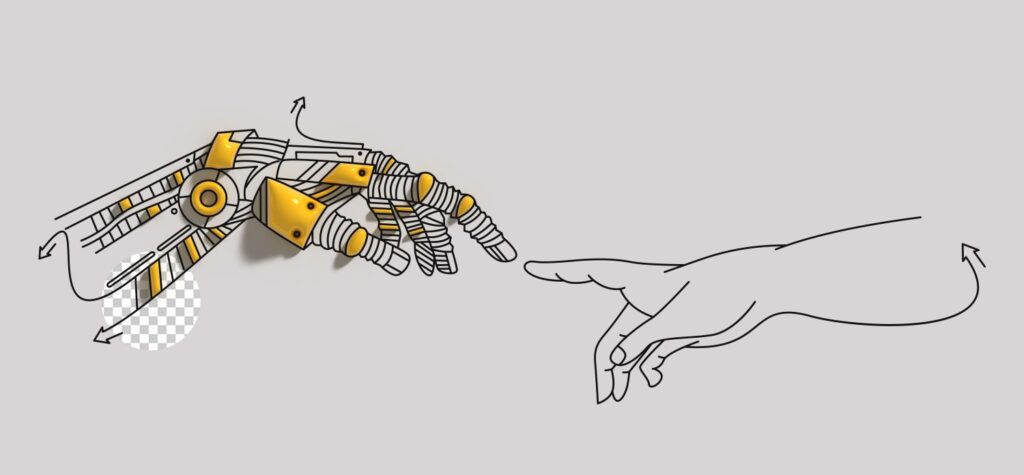
El texto ordena la evolución tecnológica en etapas y fases: de la invención por azar y el oficio artesanal a la máquina, la alianza con la ciencia y la automatización basada en control.
The task of grouping various Technological Objects according to general criteria is important when defining Technology as a field of knowledge. One such criterion is historical, since it is possible to identify successive stages in the evolution of Technology throughout history. Ortega y Gasset, whose anthropological and philosophical ideas were discussed earlier, distinguishes four stages: the domination of chance, the artisanal stage, the technical stage, and the technological stage in the “scientificist” sense. However, when using this classification, we must note that although these stages appear sequentially within a given cultural setting, they represent different modes of production that may sometimes coexist—usually in unstable form.
In the first stage, the number of techniques available to humans is still small, although they likely form a coherent corpus allowing technical actions to be distinguished from more natural actions. There are no specialists yet. The capacity for change and the intellectual act of re-signification—main features of technological action—remain unconscious; humans invent, but do not yet know they can invent. Innovation emerges slowly and by chance, not as a deliberate solution to new problems.
In this early stage, humans were likely inspired by the possibility of extending their limbs to increase reach. Yet they used elements foreign to their bodily and mental structure from the beginning: fire and the wheel have no anthropomorphic equivalents. These two basic elements of civilization occupy very different positions. Fire is a natural phenomenon, and the technical achievement lies in its control—something predating Homo sapiens. The wheel, much later, was an “absolute” invention, since rotational movement is foreign to living nature. It was invented in several civilizations but not all, and in some it was even abandoned when it ceased to meet societal needs.
In the second stage, specialists appear: artisans. Only technai exist—techniques that are also arts, as reflected in the common root of “artist” and “artisan.” Knowledge is transmitted orally through direct apprenticeship, and various schools and styles develop. Artisans use tools, although the concept of the machine has not yet arisen.
The third stage is that of the technology of technicians. The machine appears and quickly takes center stage, although it coexists with artisans for a long period. For example, the mechanical loom—though still a tool compared to the manual loom—is no longer clearly at the service of the artisan. The artisan’s work begins to split into two roles: the technician who designs and builds machines, and the operator who attends them, no longer the owner in either economic or technical terms.
In reality, during this stage the evolution of the economic system toward capitalism introduces a new factor that splits the artisan’s unified role into three: the operator, dominated by the machine and its owners while performing tasks the machine cannot yet accomplish; the technical engineer, who builds machines and produces innovations at an increasingly rapid pace; and the owner-financier, who becomes progressively more dominant. This stage also coincides with the transformation of money from a mere means of exchange into a central societal force.
In the fourth and current stage, a symbiosis occurs between machine-based technique and science. Development depends on scientific knowledge, which in turn advances thanks to technologies that invent and construct scientific instruments.
It is also possible to subdivide the history of Technology into phases defined differently. A first phase involves humans using artificial means to extend the reach and force of their limbs: from planting seeds with a stick (still used today) to using a plow pushed by the farmer. In the second phase, humans replace their limbs and muscles with the muscular work of others—slaves, animals—and later mechanical devices. The plow is now pulled by an ox, while the farmer ensures it stays aligned.
In a third phase, control elements begin to dominate. Physical labor is almost entirely performed by machines. Humans retain only the task of control, reducing muscular effort even further. The ox is guided by a stick and eventually replaced by a tractor.
In the fourth phase, control itself is delegated to artificial devices. This is the “cybernetic” stage, in which we currently live, where human labor has been—or can be—replaced in all tasks except those requiring high-level value judgments. Watt’s steam engine illustrates this transition; Watt introduced the speed governor into a machine that already functioned adequately without it. Today’s developments show the beginning of a phase in which low-level decisions are also made by increasingly intelligent machines that understand their owner’s objectives with enough precision to act on them. High-level decisions remain human.
One important fact is the temporal coexistence of all these stages, phases, and technological bases even today. Although the dominant system is clearly defined by the rise of “high technology,” development levels across regions are uneven, and all earlier stages remain present; in some remote zones, even the Neolithic stage persists.