From Bacon to Marx and from Marx to Pragmatism
De la ciencia como dominio de la naturaleza al análisis crítico de la tecnología como fuerza estructurante de la economía y la sociedad.
The Renaissance marked the birth of Modernity. Rationality and rationalism began to prevail in explanations of phenomena, closely linked to the requirements of Western expansion across the world, the needs of navigators and conquerors, and the demands of the rising bourgeoisie. Modern science thus emerged, along with reflection on the nature of knowledge acquired through experimentation, clearly distinguished from what scholasticism regarded as the sole sources of knowledge: revelation and tradition.
Galileo focused on causal explanations of phenomena and identified the “experimental method,” restricting causality to efficient causes and emphasizing the practical value of knowing such causes, namely the possibility of prediction. Beyond knowledge itself, this approach enabled domination and control through foresight. The scientific program that followed explored the nature of scientific knowledge, particularly the relationship between causes and effects and the character of causal explanations.
From its beginnings in the Renaissance, science as we know it today presented itself as a new way of knowing the world. Understanding the world, and the relationship between our perceptions and what “really” happens “out there,” has always been a central concern of philosophy and one of its main branches: epistemology.
Francis Bacon (1561–1626) was among the first to enthusiastically propose the doctrine that dominion over nature was a divine gift. A staunch defender of science, his philosophy of domination nevertheless amounted more to a glorification of technology than of science, which he closely linked. He initiated a line of thought that persists today: technology as applied science. Filled with optimism and voluntarism, he refuted those who argued, even in his time, that sciences and arts could be misused: “Right reason and sound religion will regulate their use,” he claimed.
Bacon was the most explicit defender of the new view of science and technology as the antithesis of medieval obscurantism, and he was recognized as a precursor by Enlightenment philosophers and the authors of the Encyclopédie, including d’Alembert. Yet while they all welcomed the dawn of Modernity under banners of progress, freedom, and reason, not all shared Bacon’s optimism about technological progress. In Rousseau, a “romantic” critique of modernity already emerges. For him, the expansion of science and what were then called “practical arts” would bring material well-being, but also a softening that could prove detrimental to humanity’s noblest virtues.
Where Bacon linked technology to science and the conquest of nature, other philosophers emphasized its relationship with social and economic conditions. One of the most important thinkers of Modernity, Hegel, framed reflections on technology within the problem of social domination through one of his most famous dialectical oppositions: that of master and slave. The master, exercising power and embodying higher spirit, seeks to reaffirm spiritual dignity by relegating all labor to the slave (thesis). Yet through a dialectical reversal (antithesis), the slave gains a dignity of his own as the bearer of labor and, consequently, as the carrier of technological progress, which will eventually enable liberation through awareness of human dignity (synthesis). Hegel thus implicitly shares Bacon’s technological optimism: technology will make us free.
The Kantian Friedrich Dessauer sought to complete his master’s thought by proposing, in addition to Kant’s three critiques of metaphysics, ethics, and aesthetics, a fourth: a “critique of technological reason.” Though trained as an engineer rather than a professional philosopher, Dessauer’s position is almost mystical. He argued that technology makes contact with the “thing in itself,” deemed inaccessible by classical analytic philosophy. This connects to the pragmatic criterion of verifying scientific knowledge through effectiveness: an artifact is built according to principles derived from scientific research, and the fact that it works as expected serves as proof that the underlying laws are “true,” or at least effective, which is not necessarily the same. This is one of the definitions of “truth” often adopted by pragmatists, though epistemologists frequently reject such arguments.
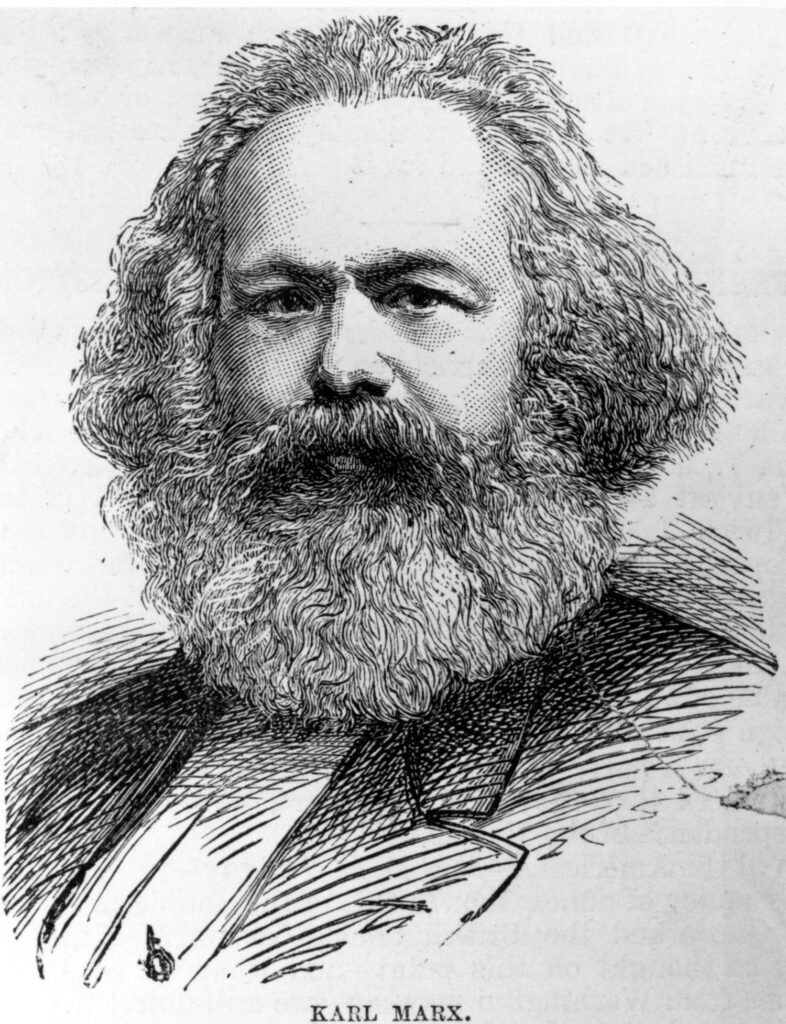
A thinker who addressed technology earlier and more thoroughly than many others, at the height of the Industrial Revolution, was Hegel’s heterodox disciple, Karl Marx. Beyond his political legacy, Marx was a major thinker who entered intellectual history as a theorist of political economy. He developed a theory of the capitalist system’s functioning and expressed admiration for its dynamism in the preliminary manifesto of the communist movement he helped to found. Marx emphasized the fundamental importance of the evolution of the means of production—that is, technology—in shaping social structures. In this respect, he leaned toward a form of determinism, speaking with enthusiasm about several characteristic features of capitalism, including the necessity of constant technological innovation and the singular role of money in capitalist society. Now that the political turmoil generated by his ideas has settled, it may be possible to assess more objectively the thought of one of the first authors to analytically dissect the workings of the capitalist economic system in which we live, a system that may only now be reaching maturity.