The historical vision of science
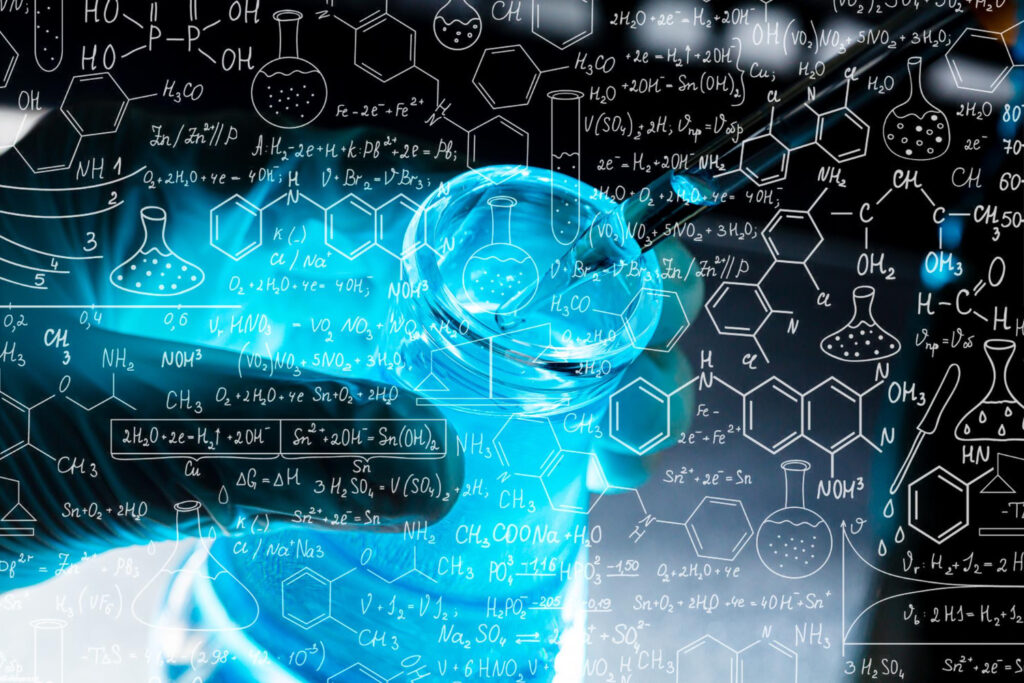
La ciencia moderna consolidó un método basado en experimentación, matematización y verificación, impulsando avances tecnológicos y nuevas disciplinas.
From a historical perspective, it can be argued that, beyond the undeniable importance of its concrete achievements, the greatest contribution of science during this period was the creation of a new working methodology. The emphasis placed on experimentation—through which basic theoretical hypotheses are derived—the use of formalism and language expressed through mathematical symbolism, and the need to validate theory through experience constituted the fundamental aspects of this new scientific approach. Subsequent historical development was largely shaped by this framework.
At the same time as this scientific expansion took place, a significant technological revolution also unfolded. Both processes supported and benefited one another. The refinement of optical instruments, such as lenses that enabled the construction of telescopes and microscopes, played a role as crucial as that of mathematical calculation methods. This spirit extended into the following centuries, producing results comparable to those of physics in disciplines traditionally less developed, such as chemistry and biology. The evolution of science from its origins to the consolidation of post-Renaissance scientific principles reflects this sustained dynamic.
The true outcomes of the renewal of physical and theoretical sciences became evident from the 18th century onward. As new discoveries and doctrines multiplied, notable progress was achieved in infinitesimal calculus, rational mechanics, and astronomy, gradually incorporating other disciplines. The effects of this systematic mindset were observed in zoological and botanical classification methods, as well as in rapid advances in gas theory and chemical combinations. By the end of the century, chemistry established its rational principles through the formulation of fundamental laws and the adoption of a standardized nomenclature that facilitated classification and comparative study. During the 17th century, coherent descriptions of electrical and magnetic phenomena also emerged, stimulating further research and contributing to the global dissemination of Western scientific resources, including into the Americas. From the newly formed United States and Hispanic American regions came notable contributions in chemistry, physics, and metallurgy.
One of the consequences of the Industrial Revolution, which from the early 18th century profoundly transformed the technical and industrial practices of Europe and the Americas, was the remarkable increase in society’s engagement with scientific activity. Numerous discoveries across various scientific fields followed throughout the 19th century. Physics reached a point of synthesis and debate through the laws of electromagnetism, demonstrating the maturity of its analytical methods. Meanwhile, descriptive chemistry evolved into an atomic conception of elements, organized within a periodic table of properties that enabled more precise systems of experimentation and study.
The life sciences underwent a redefinition of their foundational principles. Knowledge and systematic classification of living beings expanded progressively, and cellular studies of organisms began to take shape, forming the basis for future research. Toward the end of the century, the emergence of well-founded and controversial theories on the evolution of species strengthened the credibility of biology across society.
During the 20th century, the scientific method became generalized with the emergence of new disciplines. Advances in biological sciences were complemented by revolutionary developments in physics. Quantum theory introduced the concept of discrete energy exchange at the atomic level, while relativity, formulated by Albert Einstein, established the equivalence between mass and energy and opened the way to nuclear energy. These advances redefined the fundamental principles of physics. At the same time, biology delved into the internal structure of cells, uncovering mechanisms governing heredity and life processes. With the general acceptance of evolutionary theory as proposed by Charles Darwin, fields such as genetics, microscopic physiology, and microbiology gained prominence. These developments not only provided deeper explanations of life at its most basic level but also supplied industry and engineering with powerful tools for transforming matter.
A defining characteristic of 20th-century scientific activity, within a context of extraordinary expansion of knowledge and resources, was the interconnection between theoretical, experimental, and applied science. Its effects became evident in the rapid evolution of communication, transportation, labor organization, and standards of living, all of which significantly altered social practices.
Finally, as a result of the anthropocentric orientation of modern thought, the emergence of scientific methods in the study of social sciences during the 19th century reached a notable peak in the 20th century. Rigorous and critical approaches to understanding society, history, and human behavior led to the development of numerous disciplines, each seeking its place within the broader structure of human knowledge about the world and itself.