Information Encoding
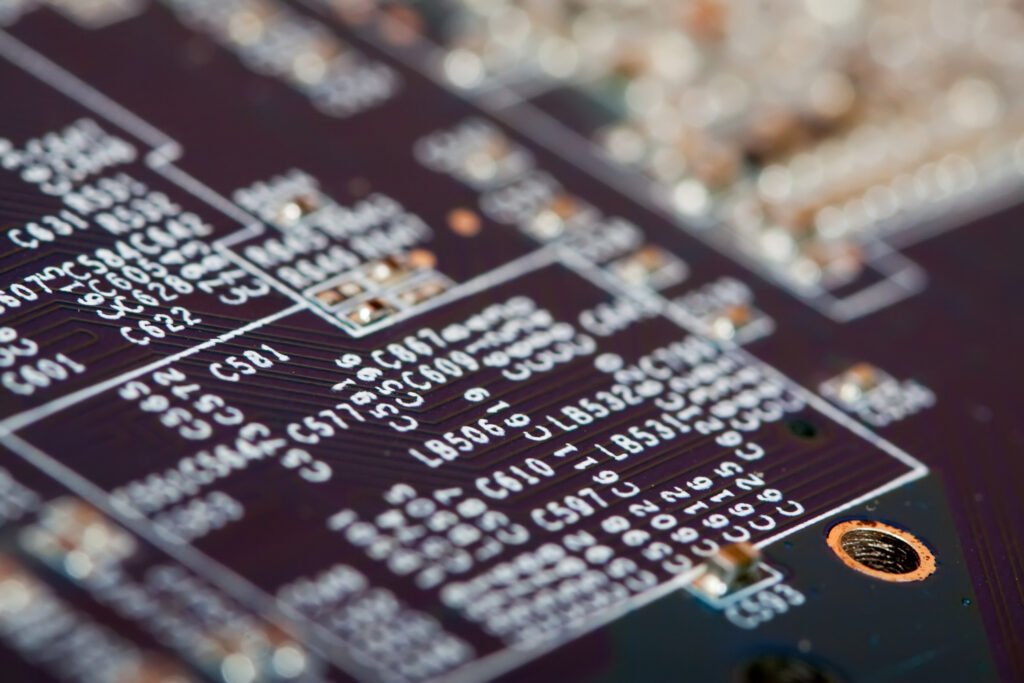
Las computadoras representan la información mediante códigos binarios y la transmiten entre sus componentes a través de buses.
The word computer, which we will use throughout this study and which is continually encountered in technological developments, is an English term. It refers to the function of calculating data. We can therefore say that a computer is a machine that processes information: it receives input data, works with it and, once its task is complete, delivers new information ready for the user to use. We must establish some differences between a calculator and a computer. A calculator is defined as a machine that performs mathematical operations on data entered by the user through input devices—in this case, a keyboard—and produces results according to the mathematical operation previously selected. A computer is a machine whose function is no longer simply to calculate, but to process information. To manage and process information, the computer follows a procedure that we will describe later.
Information Processing
A computer must be supplied with information as its raw material in order to produce final results that serve the user. In this sense, a parallel can be drawn between a computer and a machine tool, since the latter, like a computer, works on raw material through a series of machining processes until it transforms it into something—a component—useful to people. The same applies to computers and information. The word information has a broad and complex meaning. For our purposes, information can be described as anything the human brain is capable of transmitting and receiving. People communicate their thoughts, desires or feelings through words, gestures, sounds and so on. Letters of the alphabet, decimal digits, linguistic rules, mathematical formulas and images are all signs of information. A computer must be able to accept and process information consisting of signs and symbols compatible with its structural characteristics; in other words, information must be presented in an encoded form. In summary, information must be compatible with the computer in order to be processed.
Types of Computers
According to how they process data, computers can be divided into two groups: analog computers and digital or arithmetic computers.
- Analog computers
They transform input data or information into continuous physical quantities, such as electric current or fluid flow, and operate on these quantities. Consequently, another physical quantity is obtained, whose measurement represents the result of the operation.
This type of computer operates very quickly but has limited precision. Its use has been restricted to a small number of highly specialized applications.
- Digital or arithmetic computers
To obtain final results, this type of computer converts input data into discrete or discontinuous quantities, which it encodes as numbers in order to operate on them. The processing produces another discrete or discontinuous quantity. This process is slower but much more precise. This is the most widely used type of computer, and it is the one we will discuss in the following pages.
The Need for Encoding
The previous section showed that a computer requires information as its foundation: the raw material it needs to perform its function, which is to handle and process information.
For our thoughts, transmitted through signs or sounds, to be understood by those around us, we must establish a convention. For example, the Spanish word “casa” consists of four signs—c, a, s, a—with particular sounds when pronounced and the meaning “a place that provides shelter for people.”
In computers, input information must be transformed or encoded so that the computer can handle it. This information is supplied through words understandable to people, typed using a keyboard or entered through other suitable input devices that constitute the computer’s data input mechanisms. Experiments are currently being conducted with computers that accept commands or information. Whatever system is used to supply information to a computer, it must internally encode the signs into a form its circuits can handle.
The Internal Structure of a Computer
When studying a computer, we will distinguish four main blocks:
- Central processing unit.
- Memory unit.
- Controllers.
- Input/output interfaces.
In addition to these four blocks, a computer has a series of integrated circuits that support and enable the operation and communication of its entire hardware structure.
In the previous chapter, we saw that the central data processing unit consisted of two main units: the control unit and the arithmetic logic unit. This central unit is commonly known as the CPU (Central Processing Unit). It consists of electronic circuits capable of performing control functions and arithmetic and logical calculations. All these circuits are always integrated into a single microprocessor or microcomputer, depending on its internal structure.
Buses
The CPU communicates with all memory locations and all computer peripherals through pathways or channels made up of groups of conductors called buses.
The buses most commonly found in computers are:
- Data bus.
- Address bus.
- Control bus.
- Data bus
Data travels along this bus from one part of the computer to another. On this bus, data can be input or output relative to the CPU, memory and input/output controllers.
- Address bus
Its function is to select or address the different parts of the computer. The CPU can use this bus to select a memory address and subsequently read the data it contains.
From the CPU’s perspective, this bus is always an output bus.
- Control bus
The control signals for the entire system travel along this bus. From the CPU’s perspective, it can be an input or output bus because, in addition to controlling peripheral units, the CPU can receive information about the status of a particular unit. All information, whether data, addresses or control signals, travels along the bus conductors as the absence or presence of voltage on each one. The absence of voltage is represented by a 0, and the presence of voltage by a 1. All information traveling along a bus is encoded in binary form.
Another way for the CPU and peripherals to communicate is through a multiplexer, which allows two or more peripherals to communicate with the CPU over the same channel and at the same time.