How Do We Imagine the World?
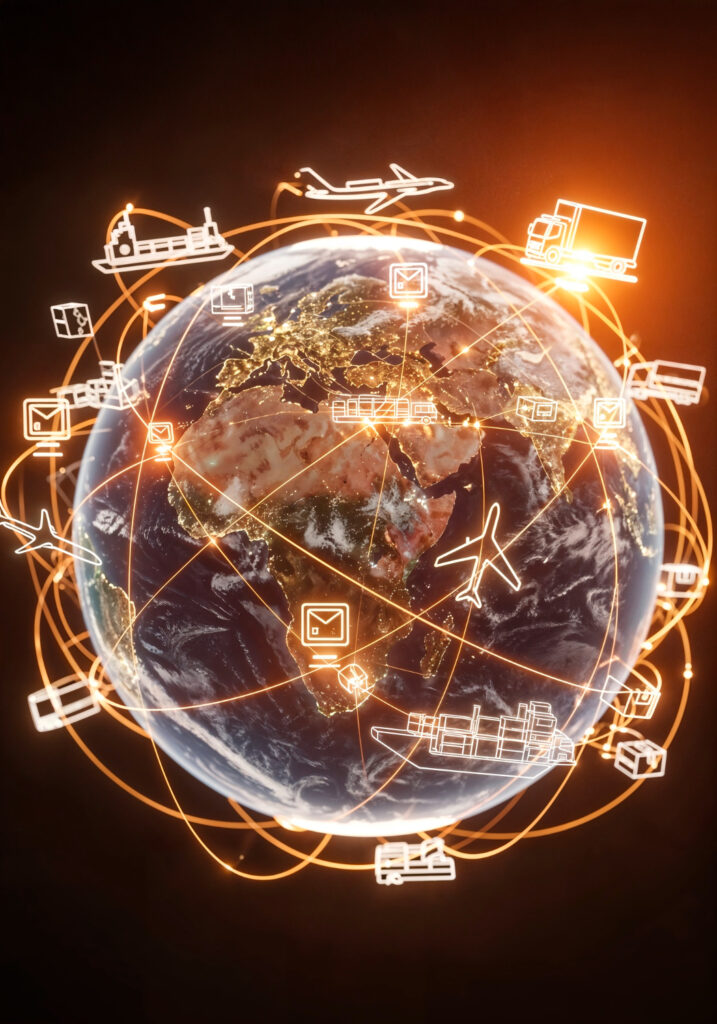
Las redes de comunicación y las computadoras transformaron la forma en que las personas intercambian información, convirtiendo al planeta en un sistema global interconectado.
The question confronts us with the image we hold of our material reality on Earth. This image is the result of many accumulated ideas. What is fundamental to human beings is their culture. When culture changes, the ways of believing and seeing also change. For a long time people believed that the Earth was flat, like a chessboard on which peoples, continents, islands and seas were arranged. A celestial vault covered this board. This vision of the world endured even after its scientific refutation by Galileo during the Renaissance.
The roundness of the Earth, the proportional drawing of the continents on the sphere that represents it, and the great movement of the planets around the Sun have long been accepted knowledge. Nevertheless, this image no longer corresponds to our era. It has become outdated. It is true that the Earth has not ceased to be approximately round, that the continents have not changed their position, and that the planet still largely displays the blue color of its oceans. Yet it is no longer simply a sphere rotating silently in space.
The third and most recent image of the Earth is closely related to the developments brought by computing and telematics. The Earth is now a planet crossed and traversed by an infinite number of communicative lines. Millions of people speak with others who are thousands of kilometers away. A multitude of communication networks—whether dedicated to the transportation of people and goods (maritime routes, air routes, roads, highways and railways) or intended for the transport of information (telegraph, mail, telephone and information highways)—connect all parts of the planet with one another.
Of course, these communicative processes cannot be seen, but they are entirely real. Ours is an interconnected world. Telephone lines, radio waves of every type and range, and countless other media transmit words and data. All these elements transform our planet into a place where people remain in instant contact despite the distances that separate them.
What Sensation Would Be Felt by Beings from Another Galaxy Approaching Our Planet?
Such beings would probably receive electronically an intense communicative hum, a continuous and effective flow of information. The contemporary world can hardly be defined better than as a vast and extremely complex field of exchange of every kind of communication. If one stands on any ordinary street, the crossing of these communicative channels can be detected through electronic “eyes,” with flows moving back and forth in the form of waves, lines, papers or spoken words.
Technical progress has led human beings to refine their forms of production, consumption and leisure. Since the eighteenth century technological development has begun to create difficulties of effective control. At the same time the quantity of information—technical data, statistics and documentation—has grown considerably. It should be noted that this mass of information does not increase arithmetically but in geometric progression, which is much faster.
Both the control of machines and the organization and direct access to this immense amount of information required the invention of a device capable of reproducing certain aspects of human mental capacity and acting as an auxiliary to human beings. This device is what we now know as the computer.
What Is a Computer Used For
What truly matters is the purpose of a computer and the tasks of everyday life to which it can be applied. Its introduction produces a qualitative change in both the organization and development of work and leisure. A computer can perform many functions. It can control irrigation and environmental conditions in a plantation, conduct extremely delicate explorations of the human brain, assist in surgical operations, forecast atmospheric risks, test cooking recipes, send letters at the speed of light, regulate all mechanical and electronic systems in a building, or carry out the population census of a country.
The answer to the question of what a computer can do may be either very long or very short. If we list everything it currently performs, the answer must be extensive. If we consider everything it might do in the future, the answer can be very brief: almost everything. This totality is not absolute. It means that computer applications are not necessarily limited by the material nature of the computer but by human beings themselves.
The only known limitation of the computer is that imposed by the limits of human imagination. Our imagination determines the scope of application of both computers and computer science.
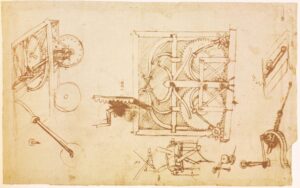
The configuration of the computer leads to this versatility, as wide as it is unexpected. The first calculating machines, such as those created by Pascal or Leibniz, simplified certain arithmetic operations but followed rigid structures with no possibility of altering their mode of operation. The computer emerged from the revolutionary idea of Charles Babbage in the first half of the nineteenth century: to construct a machine whose structure would remain open to any form of operation.
Such was the greatness of his conception. Instruments had previously existed for certain tasks, but a tool intended to assist the human mind needed to function in a way comparable to the brain. This vital organ suffers no inherent limitation in its activity and can be applied to the solution of all kinds of problems. In a parallel way—though with enormous differences—the computer is a machine of general purpose or general use.
Physical concepts and programming constitute the material and logical foundation of this reality. It is a unified duality often described as hardware, or physical support, and software, or logical support.
Hardware and Software
The computer is a completely unified system composed of two closely related parts: hardware and software. The English word hardware refers to the “hard” or material part. Etymologically, therefore, the computer is made up of a hard component and a soft component. These expressions must be understood metaphorically. They indicate that there are tangible material elements forming the physical support of the system, together with logical elements that guide its operation.
Control Unit
The control unit performs the function of central direction. It coordinates the operations of the computer and ensures that the instructions of the programs are executed in the correct order.
Arithmetic Logic Unit
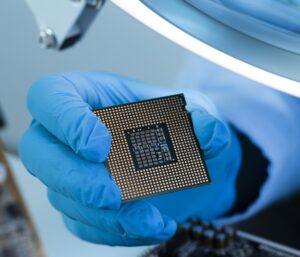
The hardware consists of the physical elements of the computer, such as machines and circuits, and may be compared with strength, while the software—the set of programs, data, designs and instructions—represents intelligence. Hardware is difficult to modify, whereas software can be altered in order to perform each specific task.
Memory
The hardware of a computer is composed of several elements. The most important are described below. Memory is the part in which all processes are carried out through the instructions issued by the control unit.