Great Inventions
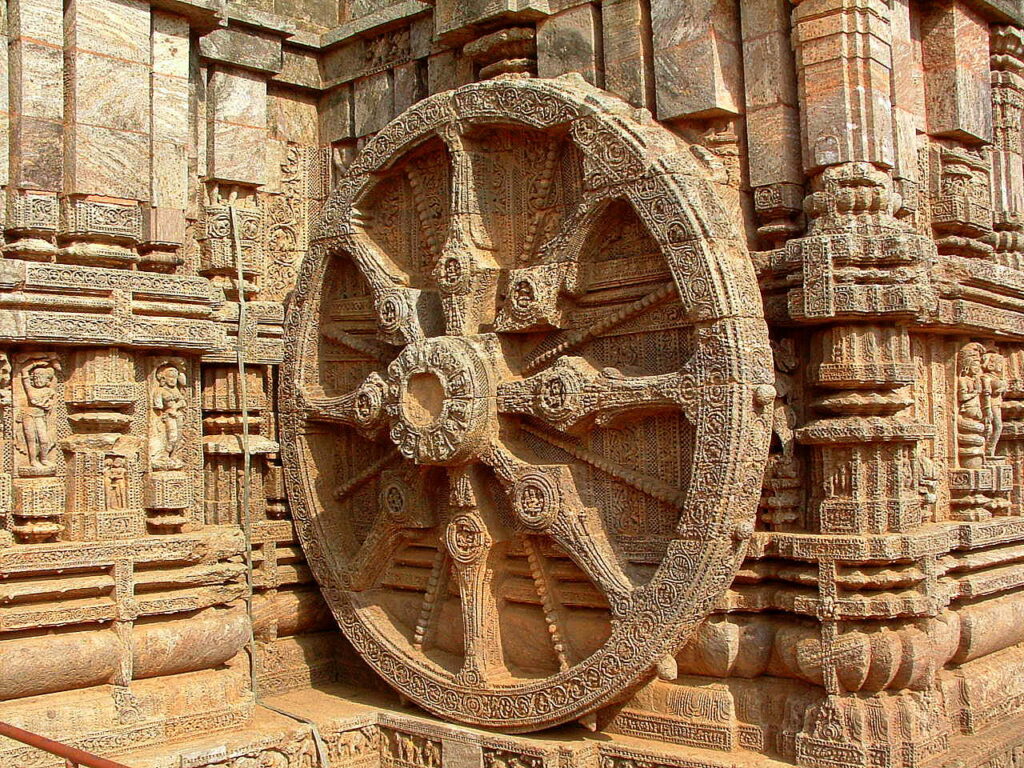
Desde las herramientas paleolíticas hasta la imprenta de tipos móviles, los inventos marcaron etapas decisivas en el desarrollo técnico y cultural.
Such cases illustrate one of the defining characteristics of the technological process: the use of an invention is essentially determined by the needs of society at a given historical moment, and not earlier, when social conditions allow for more easily attainable solutions. In Egypt, Mesopotamia, India, China, Greece, or Rome, many inventions achieved over the course of their respective civilizations found no concrete application and were abandoned, since the abundance of slave labor rendered mechanical devices unnecessary. Another characteristic of the technological process is that, in certain periods, inventions cannot be attributed to any particular individual and sometimes not even to a specific culture or civilization. This phenomenon, inherent in the non-individualistic structure of ancient cultures (and reappearing during the Middle Ages), began to change in Greece and Rome and disappeared almost entirely with the Modern Age, when the rise of the bourgeoisie once again emphasized the creative individual in art, science, and technique.
Inventions such as those mentioned above, along with others like the compass, gunpowder, paper, and the mechanical clock, as well as fundamental applications in construction such as the arch, the vault, and the dome, were the result of a convergence of individual efforts developed over centuries and crystallized into these forms. This tendency toward anonymity among the creators of forms and instruments has reemerged in the present day. Teamwork, the multiplicity of techniques, and their complexity have produced extreme specialization, requiring the collaboration of several individuals to carry out research or construction projects. The development of modern technique has enabled achievements that cannot be attributed to any single personality but rather to organized teams pursuing research objectives.
Steel, plastics, synthetic chemical materials, reinforced concrete, and electronic instruments rank among the most important inventions of this era and cannot be regarded as the property of any individual or specific culture. The inventions and inventors discussed below therefore constitute a phenomenon of the Modern Age and the early part of the Contemporary Age. They are among the most prominent representatives of the period of vigorous technical development that began in the Renaissance and laid the foundations for the progress of our time and the future.
The Printing Press, the Invention that inaugurates the Modern Age
Written communication, whose origins date back to the earliest civilizations, developed slowly, limited by the labor of scribes who copied texts by hand onto clay, papyrus, parchment, or other suitable materials. Printing with woodblocks, used in China and Japan (seventh century), evolved into manual printing with movable wooden type (eleventh century) and later with metal type (fourteenth century). A similar process occurred in Europe over a much shorter period: woodblock prints of texts, or block books, were first recorded in Ravenna in 1289, and during the fourteenth and early fifteenth centuries evidence of their use exists in Ulm, Venice, and Brussels. As for manual printing with movable type, it was known in Antwerp, Haarlem, and Avignon at the beginning of the fifteenth century.
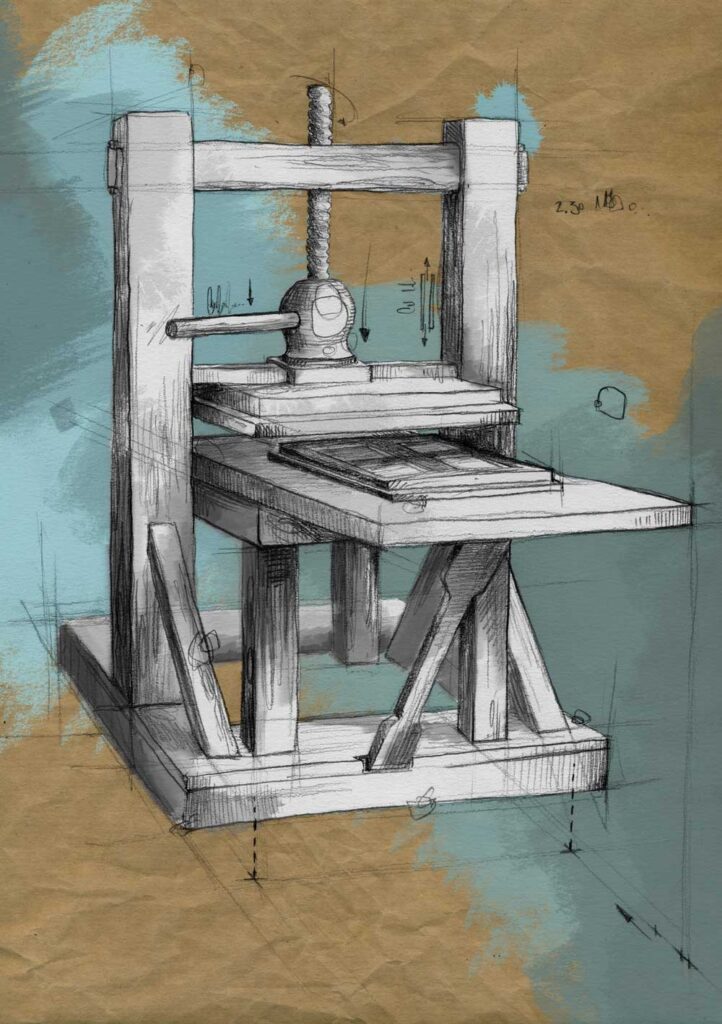
The refinement of printing with movable type, a subject of historical debate, is generally attributed to Johannes Gutenberg (Johannes Gensfleisch), who between 1436 and 1450 is believed to have developed mechanical printing, the casting of metal type, and the modification of inks adapted to the press. Among the principal works printed in the workshop of Gutenberg and his partners Fust and Schoeffer, who later became sole proprietors, are an almanac for the year 1448, printed in 1447—a date conventionally accepted as that of the invention of the printing press—the 42-line Bible (1455), and a series of papal indulgence letters.
The printing press, initially rejected by certain sectors who regarded it as a crude imitation of manuscripts, coexisted for a time with them and with woodblock printing, but by the end of the sixteenth century it had achieved complete predominance. The extension of culture to broader segments of society was accompanied by the dissemination of scientific and technical knowledge and of national languages, which replaced Latin as the language of culture. One of the most significant characteristics of the subsequent evolution of printing was the constant refinement of typefaces and of the presentation of printed works. Among the principal printers stand the Estienne family, the Didot family, and Bodoni, who laid the foundations of modern typography.