The “Idiot Box”
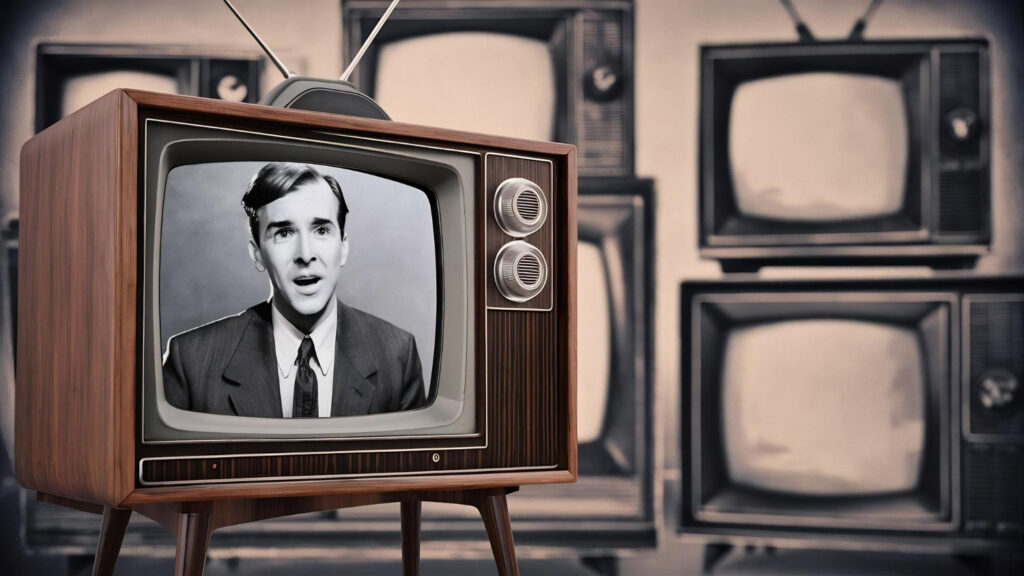
Vladimir Zworykin desarrolló componentes fundamentales para la televisión electrónica y, en sus últimos años, cuestionó el uso comercial y cultural que recibió su invento.
Everyone watches television, yet only a small minority could win a quiz show by naming its inventor. He was a Russian electronic engineer named Vladimir Zworykin, born in 1889 and deceased in 1982. After emigrating to the United States following the First World War, he first developed the iconoscope, the transmitting device, while working for Westinghouse in 1924. Later, at RCA, he perfected the kinescope, the receiver.
Academic honors poured in for this invention and for the many other contributions he made throughout his long life. Among them was the National Medal of Science, awarded for his encouragement of engineering applications in medicine.
Zworykin, however, did not die a happy man. In his later years, he regretted the way his invention had been abused. It had served more often to trivialize subjects than to enrich education and culture. The very “father of television,” then, ended his life disappointed by the product of his own ingenuity.
That feeling, like the criticism voiced by so many opponents of the invasive device, is generally and politely ignored by those who benefit from and use it. It is therefore worth attempting to trouble their consciences, especially those of the people who profit blindly from the medium, while we wait for a future in which our leaders become more socially responsible and understand that culture is what matters most. The point is to show them the other side of the coin.
British television is widely recognized for its cultural and professional standards. The man who created that different style was a visionary conservative named Lord Reith. He did so during the 1930s through the BBC in London, the broadcaster that became famous for sending messages around the world during the Second World War.
Reith and his successors maintained that both radio and television were far too important to be trivialized by unregulated market forces. One biographer wrote that Reith felt in his bones that the best way to create good media was to guarantee their independence from the Church, the State and Mammon, meaning money.
The British Broadcasting Corporation is an independent organization financed by the State and has been regarded as a cultural creation without equal in the twentieth century. For years it was attacked from the left, which accused it of elitism and indifference toward popular tastes. When the left lost influence during the 1980s, the right took its place in making the same attacks.
And on what grounds? Quite simply, elitism and indifference toward popular tastes. Criticism from both extremes is, in fact, evidence of the BBC’s merits.
What characterizes the BBC is precisely its general refusal to patronize its audience or treat the public as less intelligent than it really is. At the same time, it is guided by the belief that people have the right to complete information and to a genuine exchange of opinions.
Radio and television, in this view, are a vitally important part of culture as a whole, rather than mere forms of entertainment. It is almost as though Lord Reith had anticipated what market forces would become capable of doing with the products of human ingenuity.
In the United States, many people regret the British advantage in this area. The history of American television, they argue, is the exact opposite of what happened in Britain. Commercial television came first and left its mark on the entire system.
Cultural television has remained a minority presence and has suffered repeated attacks from Republican governments. Its principal representative, the Public Broadcasting Service, or PBS, endured enormous pressure during the Nixon and Reagan administrations.
Reagan, who could neither see nor imagine any reason why all television should not be controlled by his beloved market forces, attempted to eliminate federal funding for PBS in 1982.
Television in the United States is generally designed for commercials and advertising, rather than for education and culture.
In politics, television treats public life as a kind of gladiatorial contest, obsessively asking who is winning and who is losing while showing little interest in exploring the nature of the problems themselves. It has failed to provide an adequate forum for the discussion of real issues.
It has also been accused of corrupting politics by driving the cost of candidate advertising to scandalous levels. A campaign for a seat in the Senate may cost between 10 and 20 million dollars, financed by contributions from interested parties or, in exceptional cases, from the pockets of wealthy narcissists such as Michael Huffington of California, who spent 28 million dollars pursuing a seat he ultimately failed to win.
Despite all these experiences, American conservatives continue to regard it as unquestionable doctrine that television should be left to the free market.
Their critics, meanwhile, are astonished that they ignore how misleading the expression “free market” becomes when applied to television. The high costs involved and the limited number of available broadcasting frequencies make the industry a textbook example of an oligopoly.
Cultural critics have made arguments such as the one recently expressed by Robert Hughes: “We need a different television, with intelligent entertainment, honest documentaries that expose and reveal, and educational programs that do not patronize. We need television that addresses Americans as citizens, not merely as consumers; as students, not simply as viewers.”