Uses of metals
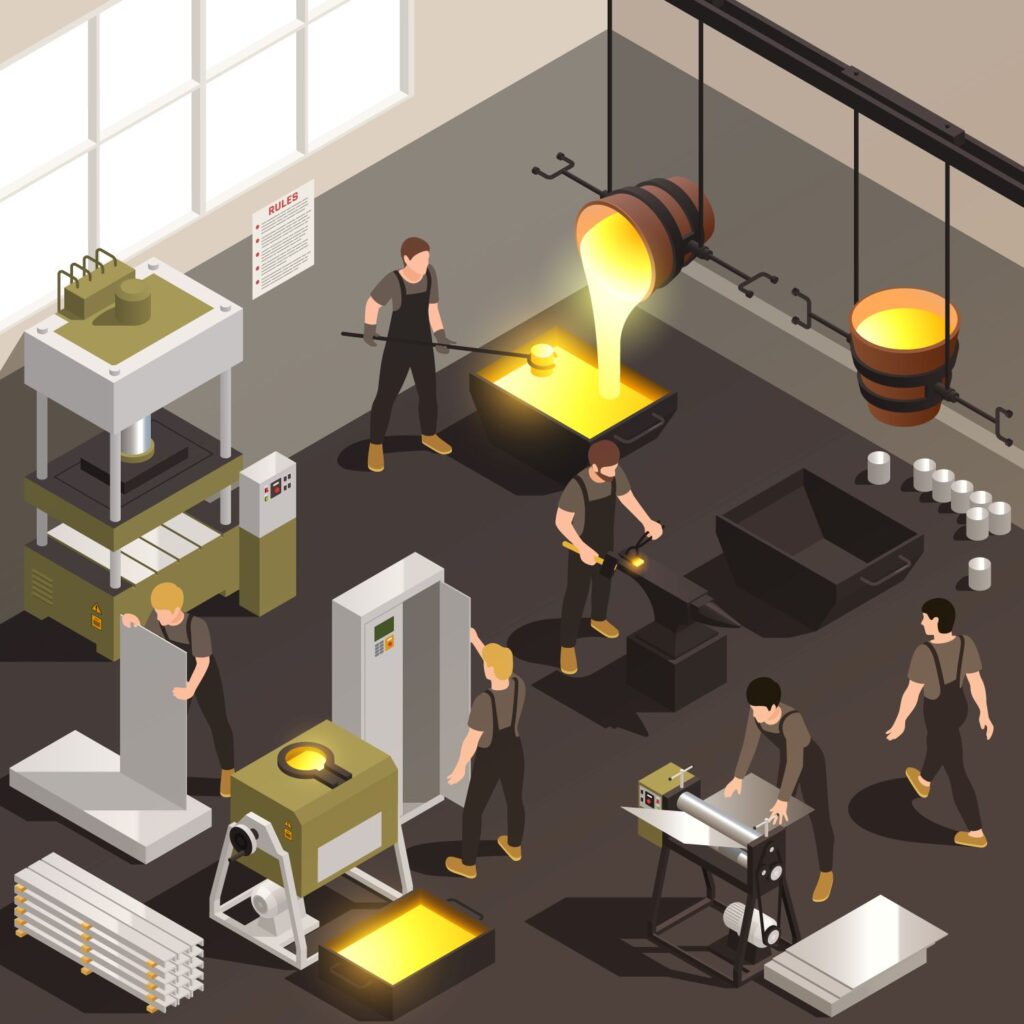
Desde el acero hasta las latas de aluminio, los metales combinan propiedades físicas y técnicas de transformación avanzadas.
Uses of metals
Some metals are inexpensive and widely used, while others are costly but highly demanded due to their specific properties. Silver, for instance, is used in jewelry and was historically a key material in photographic films. Titanium, known for its lightness and strength, is used in aircraft manufacturing and white pigments. Aluminum, rarely seen a century ago, is now essential for beverage cans.
Many metals improve their performance—such as strength and corrosion resistance—when combined with others to form alloys. The most important alloy is steel, a form of iron containing a small percentage of carbon and often other metals. Chromium helps prevent rust, while manganese increases hardness. A higher carbon content produces a harder but more brittle material.
Aluminum cans
The aluminum can is a high-technology product. Although aluminum is relatively expensive, it is used efficiently, allowing minimal material to contain a large volume of liquid. Modern cans use about 30% less metal than those produced two decades ago. Consumers value their light weight, while the reflective surface supports diverse design applications. Recycling plays a central role in many countries.
The pull tab illustrates how small metal parts are manufactured. Since metals can fracture under excessive or rapid force, strips are processed through multiple presses, each applying gradual deformation. This enables precise, high-speed production of complex shapes. Finished components are cut from the strip, and excess material is recycled.
How the can lid is made
The lid is produced through a sequence of stamping operations. These create a central dome that fits into a smaller opening in the sheet, which is then flattened to form a rivet securing the tab. Before assembly, a scored incision is made without fully cutting through the aluminum; this allows the lid to open when the tab is pulled.
The can body
A thick metal disc is forced into a cup shape. The material is stretched to form thin but strong walls, while the base remains thicker to withstand internal pressure from the beverage.
Sealing the can
Once filled, the can is sealed in a machine that tightly folds and interlocks the lid and body edges. A flexible sealant applied during lid production ensures that the container remains leak-proof.
Dislocations in metals
Metal crystals are not perfect. During solidification from the molten state, some atoms occupy incorrect positions, creating defects known as dislocations. These imperfections play a key role in mechanical behavior.
Useful movement
Dislocations allow metals to deform internally. Instead of fracturing under stress, the atomic layers shift as dislocations move through the crystal structure. This mechanism explains why metals can be shaped without breaking.
Repeated stress
When a metal undergoes repeated deformation, dislocations accumulate and interact. This process leads to hardening but also increases brittleness, a phenomenon known as work hardening.
Shaping metals
Metals can be shaped in more ways than most materials. They can be formed in solid, hot, or molten states. Casting processes have been used since ancient times. Sand casting is the simplest and least precise method, while die casting forces molten metal into closed molds to produce highly accurate components, such as those used in electronics.
Investment casting, derived from the lost-wax technique, enables precise and complex shapes. A wax model is coated with ceramic material, then heated to remove the wax, leaving a cavity that is filled with molten metal.
Metals can also be rolled into sheets or drawn through dies to form wires. In applications such as bell manufacturing, wax models are used to create seamless structures, preventing defects that could affect sound quality.