Politicians, history and their role in the advancement of science
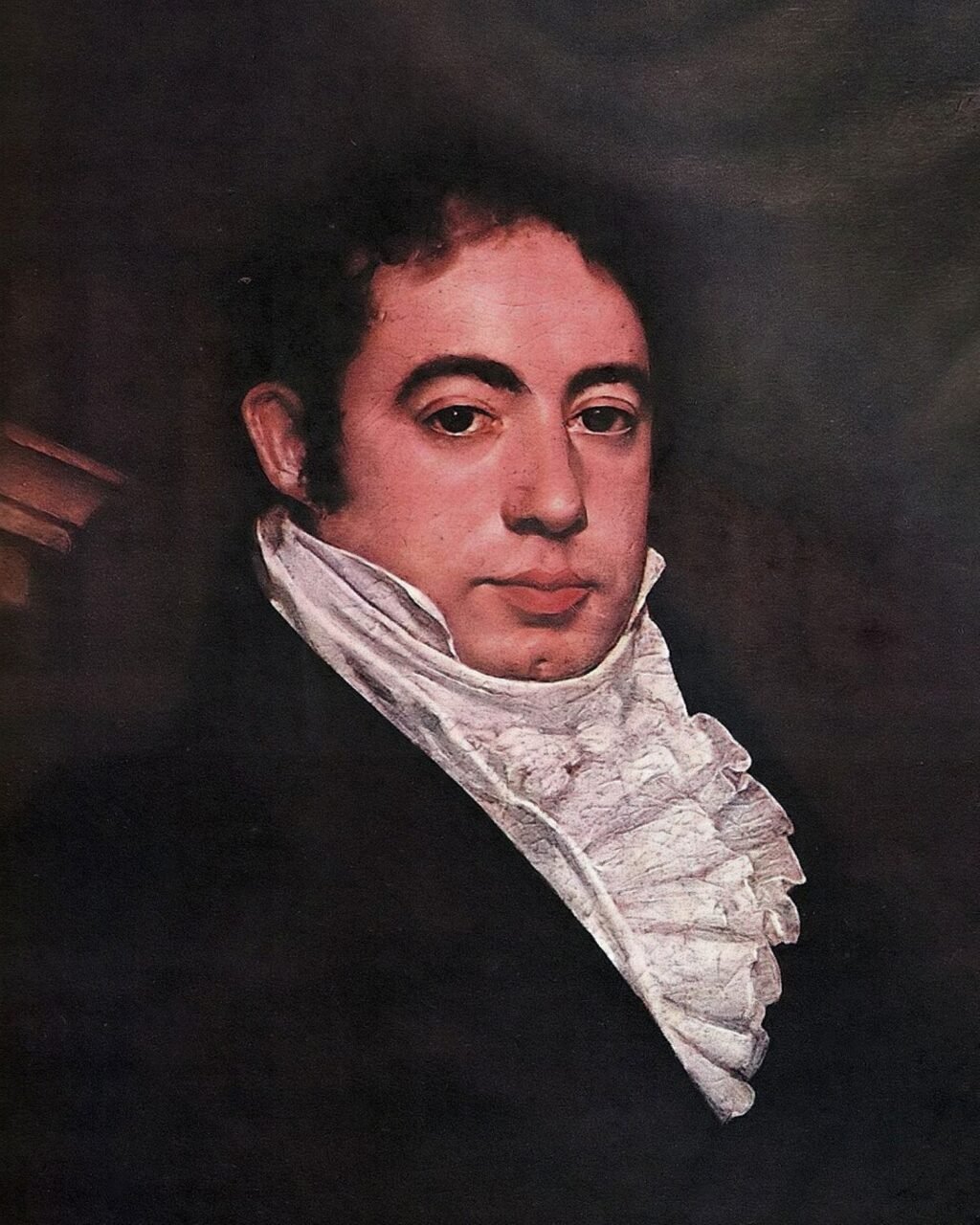
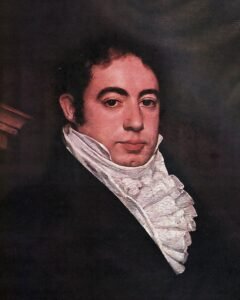
Bernardino Rivadavia promovió la incorporación de científicos e intelectuales europeos al Río de la Plata.
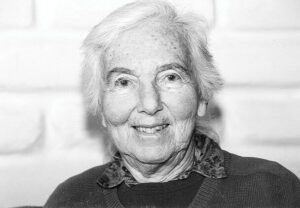
Italian and of Jewish descent, Eugenia Sacerdote de Lustig came to Argentina during Mussolini’s rule, fleeing fascist discrimination. Laura Rozenberg, her Argentine biographer, described the tremendous difficulties the young immigrant had to overcome to settle in the country and eventually secure a position in our scientific system, which she honored as few others have. Her experience echoes that of many others with similar merits. Being Jewish, outstanding or ideologically progressive was never a favorable recommendation in the eyes of Argentine officials. Still less so when someone was a political refugee. One contemporary of Eugenia was the humanist Rodolfo Mondolfo, who was poorly received here for those four reasons: he was Jewish, an intellectual, left-wing and a political exile. He lived—and died not long ago, almost a centenarian—in Córdoba, where he was an exemplary teacher. He worked there because his friends could not overcome the quiet resistance in Buenos Aires to welcoming that master of philosophy.
The experiences of these figures make it appropriate to recall two of the first Italian talents who came to the country to share high culture. They belonged to the group known as “Rivadavia’s Italians,” the subject of an excellent book by Alma Marani that we will follow here. Since so much time has passed without discussion of him, it is almost necessary to introduce Bernardino Rivadavia. In earlier times, he was called “the greatest civilian statesman among Argentines” by Mitre and “the founder of Argentine democracy” by Pellegrini. But for something like half a century, his name has fallen into obscurity. He was the guiding spirit of the Triumvirate in 1812, minister of Government of Buenos Aires in 1824 and the first president of the Republic in 1826. From those positions, he drove an extraordinary project: bringing culture, civilization, progress and enlightenment to these deserted and primitive provinces. He did so with such tremendous energy that Sarmiento’s pales beside it. He produced laws, constitutions and treaties. He worked ardently to bring industrious immigrants, science, education, ports and communications. He implemented agrarian reform, planned mining and colonization, and brought in capital. He initiated profound social reform in the country’s formative years.
Rivadavia’s great project did not fail, as is well known, and the distinguished statesman was succeeded by the colonial Restorer. His historical executioners, the “revisionists,” have made sure our young people know that he failed because he was “utopian,” removed from “reality,” a deluded man. That is one reason his name has remained in the shadows for so long. This is not the place to reassess the revisionists on this matter. In time, others will do so properly. The purpose here is simply to show certain features of that great civilizer’s project concerning the cultivation of science and culture. Rivadavia’s European connections gave him access to important advisers: statesmen, thinkers and scientists. Through them, he understood that the only way to transplant science to the Río de la Plata was to transplant people, and that the appropriate candidates, given political circumstances, cultural standing and linguistic affinity, were Italians. The struggles for freedom against Austrian rule, in the run-up to the Risorgimento, drew intellectuals into the patriotic struggle and often drove them out of the peninsula. Of the five principal figures he brought after arduous negotiations—Carta Molino, Pellegrini, Ferraris, Mossotti and De Angelis—the last two perhaps best illustrate the clash between two cultures.
Ottaviano Fabrizio Mossotti was a physicist, mathematician and astronomer. Forced to emigrate because of his political convictions, he was welcomed into the Royal Astronomical Society in London. There, British agents of the Argentine government recruited him. He established an astronomical observatory in the Santo Domingo convent. For seven years, he compiled records, conducted research, trained students and published observations of the southern sky in European journals, fighting tirelessly against the limitations and pettiness of his surroundings. His impact on young people was unforgettable. Juan M. Gutiérrez remembered him this way: “The young man who placed himself under his guidance felt his intelligence unfold, was encouraged to study, fell in love with science and grew stronger in his moral character.” Vicente Fidel López wrote: “I had the honor of having the eminent European scholar as my Physics teacher. Besides being a scholar, he was a gentleman by lineage and conduct, faultless in everything, modest, calm, kind, tireless in his studies and immensely learned.” Mossotti’s scientific integrity and personal seriousness often clashed with government officials’ lack of understanding. His isolation in a country almost entirely unfamiliar with the sciences was virtually complete. Eventually, when his homeland offered him the directorship of the Bologna Observatory, he decided to resign. When he departed in 1835, under Rosas, the English-language newspaper British Packet lamented: “Buenos Aires cannot afford to lose such a man.” His experimental physics students wrote: “Return, then, sir, safely to the land of the arts where you had the good fortune to be born, and find there the same affection we hold for you.” He died in 1867, a senator of the Kingdom, with a reputation as a scholar throughout Europe. Italy erected a monument to him in Pisa, honoring his outstanding merit.
By the twenty-eighth, the reply was in the hands of the newly appointed governor:
“General Lavalle: The phrase about which you complain contains nothing insulting in a republic; it is quite natural that someone who relinquishes command should return home. I intended to say nothing more. You are mistaken about my person as you are about my words. The current editor of the ‘Gaceta’ is a former artillery officer and a gentleman. My upbringing does not allow me to insult those who do not offend me, but neither do I tolerate insults: I await a simple indication from General Lavalle to prove it. P. de Angelis.”
De Angelis had arrived in 1827. Rivadavia fell almost immediately afterward. The cultivated Italian, who considered him “infinitely superior to his compatriots,” described those compatriots as “a band of furious troublemakers.” Provisional president López y Planes canceled his government contract. Undaunted, in 1828 the Italian published a bibliographic gem: the Latin text of Cornelius Nepos’s book, the first edition of a major classical work printed in the Río de la Plata region. He founded institutes for languages and mathematics, collected, published and gave lectures.
The Neapolitan scholar’s greatest intellectual achievement was the Collection of Works and Documents Relating to the Ancient and Modern History of the Provinces of the Río de la Plata, a historiographical series published between 1835 and 1838 that earned him public recognition and acknowledgment from London’s Royal Geographical Society. In 1851, Sarmiento called it “the most glorious monument that could honor an American state.” But after Rosas fell in 1852, De Angelis became the target of attacks from the opposing faction, which denounced him as a “mazorquero.” Old and infirm, he gradually sold his valuable library to survive. Eventually, the emperor of Brazil acquired the bulk of it: 1,700 works, 1,295 manuscripts and innumerable maps, plans and drawings, many unique or rare. Andrés Lamas wrote that it was a devastating loss for the Río de la Plata and evidence of its profound misfortunes. De Angelis died in 1859, burdened with debts and academic honors from around the world, having received news that the Brazilian emperor had awarded him the Order of the Rose, “an emblematic jewel in which gold and enamel formed a shining star and a crown of flowers.”