Lighting
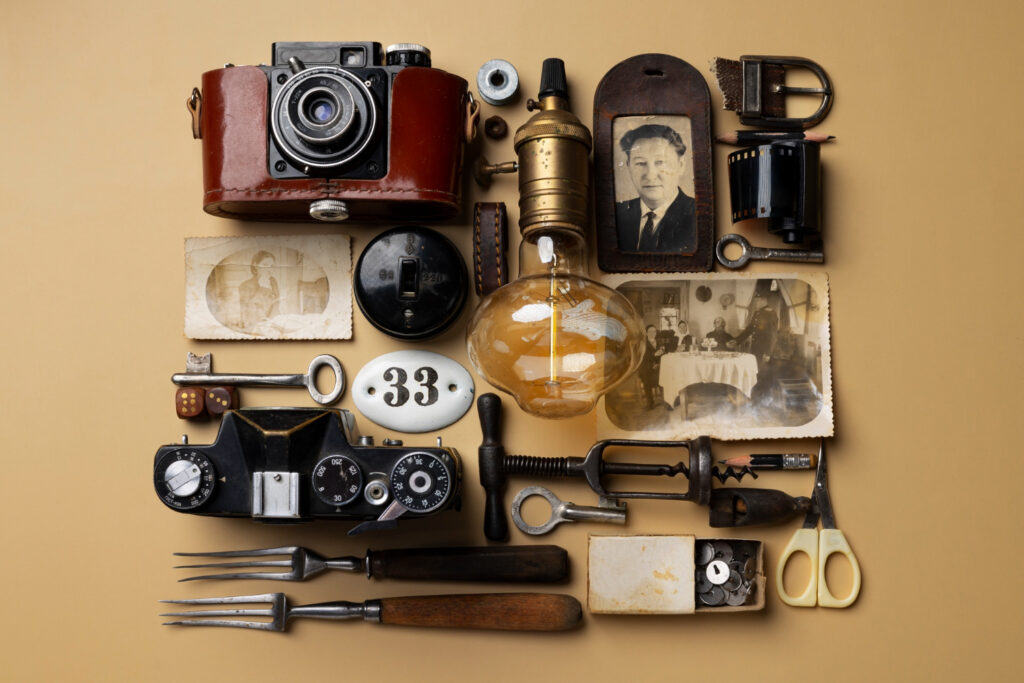
La iluminación, la medición del tiempo, el control de la fuerza, la imprenta, la óptica y el cálculo fueron avances técnicos decisivos en la organización de la vida social, el trabajo y el conocimiento.
The first artificial light was fire, but it was dangerous and difficult to transport. Later, about 20,000 years ago, it was discovered that light could be obtained by burning oil, and the first lamps appeared: they were hollowed-out stones filled with animal fat. The first lamps with wicks made of plant fibers appeared around 1000 B.C. At first they had a single channel for the wick; later the wick was placed in a spout. Candles appeared 5,000 years ago. A candle is a wick wrapped in wax or tallow. When it is lit, the flame melts a little wax or tallow, which then gives light. Thus, a candle is an oil lamp, but in a more convenient form. The oil lamp and candles were the main source of light until gas lighting became common in the 19th century; electric light is more recent.
Measuring time
As soon as people began to cultivate the land, it became very important to know about time. But it was the astronomers of ancient Egypt, almost 3,000 years ago, who used the movement of the Sun across the sky to measure time accurately. The Egyptian shadow clock was a dial that indicated the time by the position of the shadow on certain marks. Other instruments for measuring time depended on the regular consumption of a candle, or on the flow of water through an opening. The first mechanical clocks used the uniform swinging of a rod to regulate the movement of a hand around a dial. Later clocks used pendulums, which moved from side to side. The escapement ensures that this regular movement is transmitted to the gears that move the hands.
Control of power
Since the dawn of history, sources of power have been sought to make work easier and more efficient. With the use of machines such as cranes and wheel mills, human muscular strength became more effective. It was soon seen that the muscular strength of animals such as mules, horses and oxen was much greater than that of humans. Animals were then trained to pull heavy loads and to work in mills. Other useful sources of power come from air and water: the first boats made in Egypt 5,000 years ago used the force of the wind to their advantage. The Romans used water mills to grind corn in the 1st century B.C. Hydraulic power is still important and is widely used today. In the Middle Ages, the use of windmills spread westward across Europe, when people began to seek a more efficient way to grind grain.
The printing press
Before the printing press, every copy of every book had to be made laboriously by hand. This made books scarce and expensive. The Chinese and the Japanese were the first to print books in the 6th century. Blocks of wood, plaster or ivory were used to engrave letters or drawings. When a sheet of paper was pressed against the inked block, the characters from the raised area of the engraving were printed. This is known as type printing. The greatest advance in printing was the invention of movable type: separate letters on small individual blocks that could be placed in lines and reused. This also began in China, in the 11th century. Movable type was used in Europe by the 15th century. The most important pioneer was Johannes Gutenberg, who invented type casting, a method for making many movable types quickly and cheaply. After Gutenberg’s work in the late 1430s, printing with movable type spread rapidly throughout Europe.
Optical inventions
The science of optics is based on the fact that rays of light bend, or refract, when passing from one medium to another, for example, from air to glass. The way curved pieces of glass, or lenses, refract light was known in China in the 10th century A.D. In Europe, in the 13th and 14th centuries, the properties of lenses began to be used to improve vision, and eyeglasses were invented. For thousands of years, people used mirrors, first made of shiny metals, to see. The most powerful optical instruments were capable of magnifying very small things and focusing more clearly on distant objects. Among the inventions of the period were the telescope, which appeared at the beginning of that century, and the microscope, invented around 1650.
Calculation
People have always counted and calculated, but calculation became very important when the buying and selling of goods began. In addition to fingers, the first aids for counting and calculating were small stones, which represented the numbers from 1 to 10. Five thousand years ago, the Mesopotamians made grooves in the ground in which they placed the small stones. Simple calculations could be made simply by moving them from one groove to another. Later, in China and Japan, the abacus was used for the same purpose, with its rows of beads representing hundreds, tens and units. The next improvements to these systems came much later, with the invention of aids for calculation, such as logarithms, the slide rule and basic mechanical calculators in the 17th century.