Carlos Ormachea and the energy technology behind Vaca Muerta
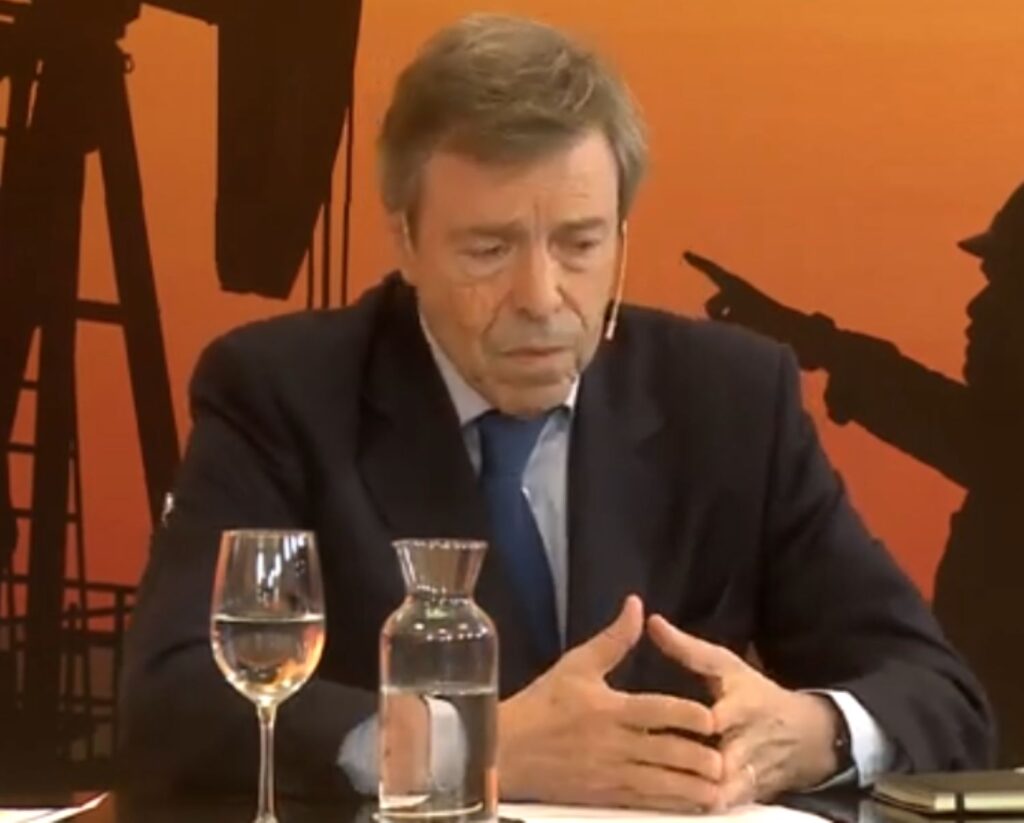
Carlos Ormachea está asociado a Tecpetrol, Fortín de Piedra y la expansión del gas no convencional en la Argentina.
Carlos Ormachea holds a relevant place within the Argentine energy industry due to his career in the Techint Group, his current role as chairman of Tecpetrol and his institutional participation as head of the Chamber of Hydrocarbon Exploration and Production. Tecpetrol currently presents him as chairman within its leadership team, with academic training as a Certified Public Accountant from the National University of La Plata and a Master in Management from Stanford University. In 2025, he was also reported as reelected president of the sectoral chamber until 2027.
A career linked to applied energy
Ormachea’s figure makes it possible to read energy as a technical system rather than as a purely extractive activity. Tecpetrol reported that, after 17 years as CEO and more than 40 years within the Techint Group, he would continue as chairman of the company. That move from day-to-day executive leadership to a strategic role places him within a generation of executives who accompanied the transformation of oil and gas into industrial platforms intensive in capital, infrastructure, data, engineering and logistics.
Applied energy requires more than investment. It requires interpreting reservoirs, designing wells, coordinating drilling, managing services, sustaining operational safety, organizing suppliers and connecting production with transportation. In that map, Ormachea became associated with a stage in which Tecpetrol deepened its presence in Vaca Muerta, with Fortín de Piedra as one of the company’s most visible developments.
Fortín de Piedra as a technological platform
Fortín de Piedra cannot be understood only as a gas field. Its development involved horizontal drilling, hydraulic fracturing, sand and water logistics, high-availability equipment, pipelines, measurement, operational planning and contractor coordination. Tecpetrol highlighted that project within the strategic transformation achieved during Ormachea’s management, presenting it as one of the company’s milestones in the Neuquén Basin.
The importance of the case lies in its scale. Unconventional gas needs to turn a geological formation into a repeatable industrial system. Each well requires technical decisions, but also a chain capable of responding with materials, timing, transportation, services and cost control. At that point, technology does not appear as a discursive promise, but as a concrete capacity to produce energy on a sustained basis.
Technology, scale and operational efficiency
Ormachea’s profile can also be analyzed through the pursuit of efficiency. In unconventional gas, efficiency means reducing drilling times, improving productivity per well, making better use of equipment, lowering relative costs, optimizing logistics and sustaining operations with safety standards. That efficiency does not depend on a single tool: it emerges from the integration of engineering, business organization, subsurface knowledge, control systems and long-term planning.
In 2017, when Tecpetrol was advancing its plan in Fortín de Piedra, it was reported that the company projected an investment of US$2.3 billion over three years and that the goal was to significantly reduce costs in Vaca Muerta. That background helps explain the technical logic of that stage: the challenge was not only to produce gas, but to reach competitive scale in an activity that demands large volumes of capital and industrial coordination.
Sector representation and energy innovation
The updated institutional information broadens Ormachea’s technological profile. His reelection as president of the Chamber of Hydrocarbon Exploration and Production until 2027 places him in a space where the agenda no longer depends only on one company. The chamber brings together exploration and production interests at a time when the industry is discussing investment, productivity, energy security, transition, infrastructure and rules to sustain long-term projects.
That sectoral role matters because energy technology does not advance in isolation. For Vaca Muerta to consolidate production, exports and domestic supply, it needs pipelines, plants, ports, services, suppliers, specialized talent and economic frameworks capable of sustaining investment. Ormachea therefore appears as a figure positioned between corporate experience and the representation of a broader technical chain.
A profile for understanding industrial energy
Carlos Ormachea represents a trajectory linked to the transformation of energy into technological infrastructure. His career makes it possible to observe how modern oil and gas depend on applied knowledge, scale, investment, productivity and execution capacity. Fortín de Piedra works as the most visible case of that reading: a project where technique, management and industry combined to turn unconventional resources into real energy production.