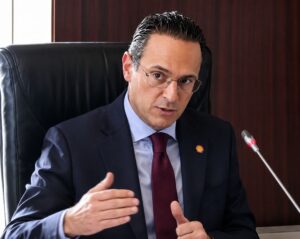
Daniel González reads Argentina’s energy business through Vaca Muerta and RIGI

Daniel González analizó el negocio energético argentino en la AmCham Summit 2026.
The area’s coordinating secretary described the new investment framework for oil, gas and mining before the country’s main operators.
Daniel González outlined his diagnosis of Argentina’s energy business before executives from Pan American Energy, Central Puerto and Chevron during the energy chapter of the AmCham Summit 2026. The coordinating secretary of Energy and Mining placed two factors at the center of his analysis: the geological competitiveness of Vaca Muerta and the Incentive Regime for Large Investments (RIGI) as accelerators of production and exports.
The framework that changed the sector’s rules
For González, the starting point is a change in the business regime. He described “Argentina’s return to capitalism” as decisive, a shift that, in his view, makes the macroeconomy more predictable and attracts private capital. Under that framework, he said, taxes tend to fall and inflation eases, conditions he considers necessary for the long-term investments required by the industry.
The official detailed the regulatory changes that reorganized the sector after the Ley Bases: modifications to the Hydrocarbons Law, the gas segment and the electricity framework, with resource maximization and international prices as central axes and a state that retreats to the role of regulator. He stressed that the administration did not establish a support price scheme or intervene in prices, and that the companies themselves defined how much of their costs they would pass through to prices.
Why upstream concentrates the bet
González presented RIGI as a tool that has already shown results and was extended until July 2027, with the incorporation of upstream development. He explained that the regime makes it possible to undertake wells and areas that previously remained outside plans because their numbers were too tight, and that its limited time frame pushes companies to bring investments forward. On that basis, he anticipated a strong increase in oil and gas activity over the following eighteen months.
The private sector’s view reinforced that picture on the same panel. Juan Martín Bulgheroni, from Pan American Energy, warned that Vaca Muerta contains six times the gas Argentina will consume over the next two decades and that, without export projects, that resource could not be monetized. Fernando Bonnet, from Central Puerto, described the company’s entry into the unconventional sector in Neuquén and the installation of 1.2 GW in batteries to cover peaks in electricity demand. Ana Simonato, from Chevron, compared the productivity of Vaca Muerta’s rock with that of comparable fields in the United States.
Competitiveness as a condition
The final part of the diagnosis pointed to the guarantees required by capital-intensive investment. From Chevron, Simonato listed the free movement of capital, the availability of foreign currency and respect for contractual frameworks as requirements to sustain long-term investment. It is the same agenda that González represents from the RIGI committee and that he brought to international forums such as CERAWeek, the global industry gathering organized by S&P Global.
With the first gas liquefaction terminal a little over a year away from operating, the coordinating secretary placed Liquefied Natural Gas as the sector’s next growth frontier, the segment where export-bound volumes will concentrate in the short term.