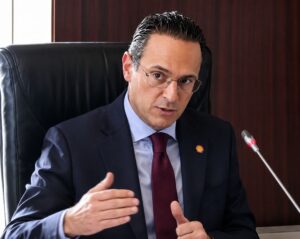
Martín Genesio and the technology that sustains energy
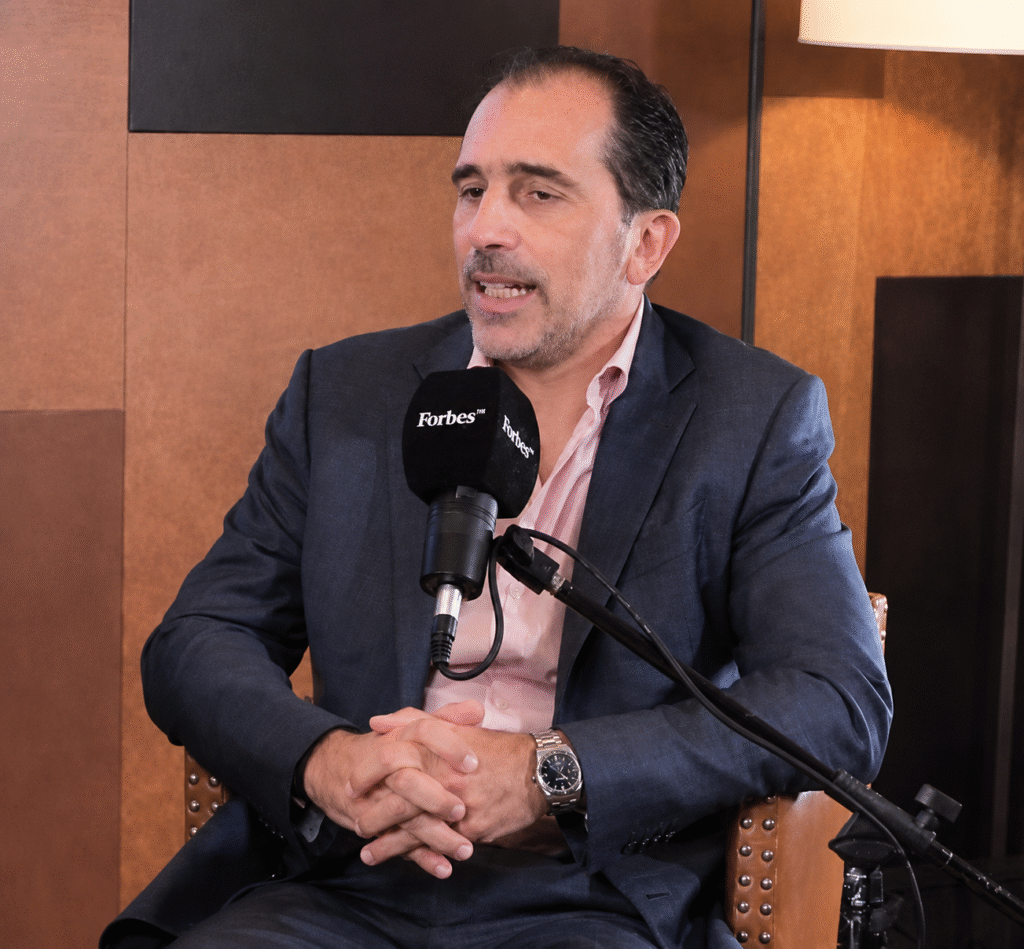
Martín Genesio analiza la energía como infraestructura clave para la industria, la digitalización y las nuevas demandas tecnológicas.
The figure of Martín Genesio makes it possible to approach energy from a technological dimension. Although his most visible public role is as president and CEO of AES Argentina, his training and career connect him with a central question for the contemporary economy: how to build energy systems capable of responding to industries, cities, homes and new digital demands.
Genesio is an Electronic Engineer from the National Technological University. That training is especially relevant because modern energy is not understood only through large physical infrastructure, but also through control systems, automation, measurement, sensors, data, networks, operational software and predictive maintenance. A contemporary power plant is not merely an industrial facility: it is a technical system that must measure, correct, anticipate and optimize its operation on a permanent basis.
Electric power requires reliability. Every available megawatt depends on coordinated processes: generation, transmission, dispatch, safety, maintenance, input supply, regulation and demand. In that architecture, technology functions as an invisible layer that allows the system to operate with precision. Genesio’s profile, trained in electronics and later specialized in the electricity market and natural gas, is located exactly at that intersection between engineering and management.
His career at AES began in 2006, when he joined as commercial manager. He later moved through the general management of Termoandes and the general operations management of AES Argentina before assuming the presidency and executive leadership.
That path matters because it allowed him to understand different dimensions of energy technology. The commercial perspective brought him closer to contracts, demand, clients and market structure. Operations connected him with availability, efficiency, safety, maintenance and asset coordination. The presidency places him on a broader scale, where technology must be integrated with investment, regulation, energy transition and corporate strategy.
AES Argentina reports that it operates 11 generation plants in different provinces and has a portfolio of around 4,000 MW of installed capacity. That geographic and technological diversity requires systems capable of integrating different assets, varied territorial conditions and changing energy demands.
The technological agenda became even more relevant with the expansion of data centers. In 2025, specialized media reported that AES was seeking to replicate in Argentina its generation business for large data centers, a model linked to the energy supply of global technology corporations. According to that coverage, Genesio stated that the country has the potential to become an energy supplier for large companies because of the diversity of its natural resources.
This point expands his profile toward digital infrastructure. Data centers are highly technical buildings that house servers, storage, networks and cooling systems. Their operation requires constant, high-quality energy. Artificial intelligence, streaming, cloud computing, fintech, cybersecurity and digital services depend on that electrical foundation. For that reason, energy has ceased to be only an industrial variable and has become a condition of the technology economy.
In that context, Genesio appears as an executive who understands energy as a support for digital transformation. Argentina could play a relevant role if it combines renewable resources, gas, infrastructure, territorial location and regulatory capacity. But that potential requires long-term investment and agreements. Without stability, technology does not scale; without reliable energy, digitalization becomes vulnerable.
His view of leadership also connects with technological culture. In 2025, during the Forbes CEO Summit, he emphasized that current leadership is based on trust, teams and adaptation, not on an omnipotent figure.
That idea has direct application in technological environments. Complex systems are not managed only from the top down; they need distributed coordination, specialists with autonomy, shared information and learning capacity. In energy, as in technology, organizational rigidity can become a risk. Adaptation, instead, makes it possible to respond to regulatory changes, technical advances and new forms of demand.
Martín Genesio can therefore be presented as a technological executive within energy. Not through the invention of devices, but through the management of systems that make modern electrical infrastructure possible. His profile shows how engineering, operations and business strategy combine to sustain an industry that will become increasingly decisive for the digital economy.