Occidental brought direct air capture to industrial scale under Vicki Hollub’s leadership
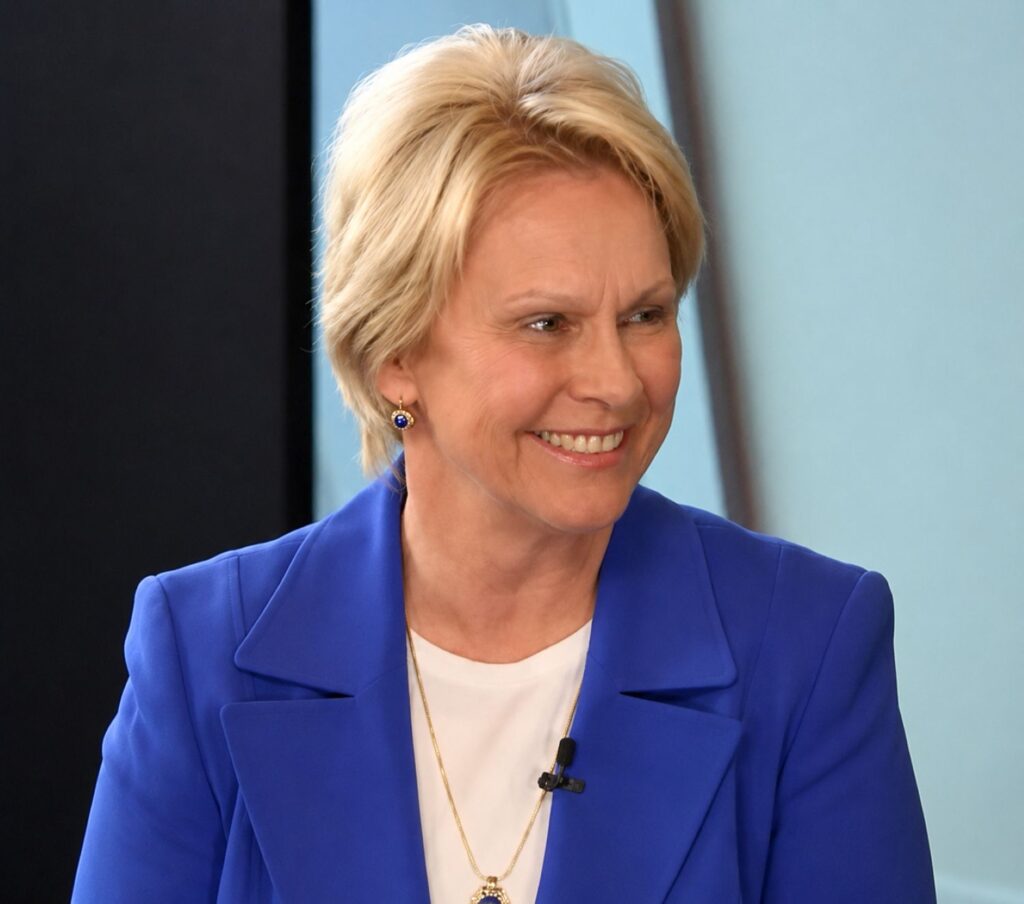
Vicki Hollub llevó a Occidental a construir STRATOS, diseñada para retirar 500.000 toneladas de CO2 al año.
The oil company is building in Texas the largest plant of its kind in the world, designed to remove 500,000 tons of CO2 per year.
Vicki Hollub transformed Occidental Petroleum into one of the energy sector’s main technological bets on carbon dioxide removal. In western Texas, in the Midland-Odessa area, the company is building STRATOS, a direct air capture facility (DAC, for its acronym in English) that required an investment of 1.3 billion dollars and is designed to remove up to 500,000 tons of CO2 from the atmosphere per year, making it the largest of its kind worldwide.
A plant to remove half a million tons of CO2 per year
The project is advancing in stages. The first phase is scheduled to begin operating in the second quarter of 2026, while the second will scale throughout the rest of the year. Regarding the development, Hollub highlighted the team’s safety performance and the degree of progress toward commercial startup, and stated that carbon capture, and DAC technology in particular, will be decisive for the future of the energy system.
The facility is being built through 1PointFive, Occidental’s subsidiary that concentrates the development of direct air capture, carbon sequestration and low-carbon fuels. That unit has already closed carbon removal credit sales agreements with major corporate buyers, a revenue path the company seeks to consolidate as the plants enter service.
The technological architecture Hollub left in place
The framework is not limited to a single plant. Occidental operates Oxy Low Carbon Ventures, the arm that brings together its decarbonization developments, and incorporated TerraLithium for lithium extraction, a key resource for energy storage. Added to that structure was the Oxy Innovation Center, inaugurated at The Ion technology complex in Houston, with a focus on the development of low-carbon technology.
A large part of that strategy rests on a technique the company has mastered for decades: enhanced oil recovery through CO2 injection. The method consists of pumping carbon dioxide into reservoirs to extract crude oil that would otherwise remain trapped in the rock, while at the same time retaining part of that gas underground. Hollub presented that prior knowledge as the foundation on which Occidental could move from using CO2 in reservoirs to capturing it for permanent sequestration.
The plan to turn an oil company into a carbon management company
The goal Hollub set for the company goes beyond field operations. The executive projected that, over a horizon of several years, Occidental would end up operating as a carbon management company, a company in which the oil and gas business would function as a support unit for that central activity. Occidental was one of the first major oil companies to adopt emissions neutrality targets, a definition that organized the investments of the final stage of her management.
The continuity of that roadmap is left in familiar hands. Richard A. Jackson, who became president and chief executive officer, previously led the company’s U.S. onshore resources and carbon management operations, the area where much of the capture program was developed. The commercial startup of STRATOS will be the first test of that transition, with the second phase scaling throughout 2026.