Ryan Lance and underground technology: the energy system that is not always seen
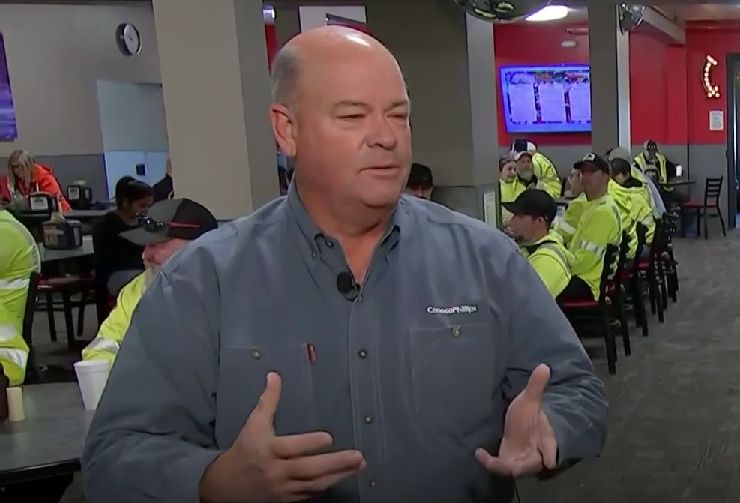
Ryan Lance representa un liderazgo donde la ingeniería, los datos operativos y la infraestructura energética se integran en la producción moderna de petróleo y gas.
Ryan Lance offers an especially useful approach for discussing technology applied to energy. Although oil and gas are often analyzed through international prices or environmental debate, their everyday operation depends on a highly sophisticated technological infrastructure. Seismic exploration, geological modeling, sensors, data analysis, horizontal drilling, hydraulic fracturing, offshore platforms, compression systems, pipelines, logistics and operational monitoring are part of a technical architecture that supports modern production.
Data, the subsurface and investment decisions
ConocoPhillips cannot be understood only as a company that extracts hydrocarbons. It is an industrial organization that turns physical information into economic decisions. Before drilling, a company must interpret the subsurface, estimate reserves, calculate pressure, assess permeability, project production curves and determine whether an asset makes financial sense. Technology reduces uncertainty, but it never eliminates it completely. For that reason, the leadership of a CEO with technical training like Lance takes on particular value.
Petroleum engineering works as an integrative discipline. It brings together materials science, geology, fluid mechanics, economics, industrial safety and infrastructure management. When Lance leads a global exploration and production company, he is not only managing balance sheets: he is directing a network of decisions that depend on well performance, basin productivity, equipment efficiency, transport availability and the capacity to process operational data.
Innovation that does not always look digital
The acquisition of Marathon Oil can be read from this technological perspective. In unconventional resources, assets are valuable not only because of the reserves they contain, but because of the ability to produce them efficiently. The proximity of areas, accumulated learning, the technical repetition of designs and the use of shared infrastructure can improve costs and productivity. This point is key for a technology article: energy innovation does not always appear as a visible device or a digital application. It often operates underground, in the way drilling is improved, data is used with greater precision, execution times are reduced, logistics are optimized and safety is increased.
The concept of intelligent energy infrastructure can also be developed here. A global company must coordinate production in different countries, manage climate and geopolitical risks, respond to demand variations and sustain operations under safety standards. Technology appears as the nervous system of that structure: it makes it possible to measure, anticipate, correct and compare performance across assets distributed around the world.
Energy as an industry of data, engineering and scale
This approach makes it possible to show that innovation does not always take the form of software visible to end users. In energy, innovation can consist of reducing the cost of each well, improving the precision of geological modeling, optimizing logistics routes, anticipating operational failures or integrating information from thousands of production points. In that context, Lance’s leadership helps explain how a modern energy company functions as a complex technological network.
His figure brings together two dimensions: technical knowledge and corporate decision-making. The subsurface does not produce value by itself; it requires data, capital, design, equipment, logistics and strategic direction. In that chain, technology is not an accessory, but the condition that makes it possible to transform a reserve into available energy.