Population Explosion
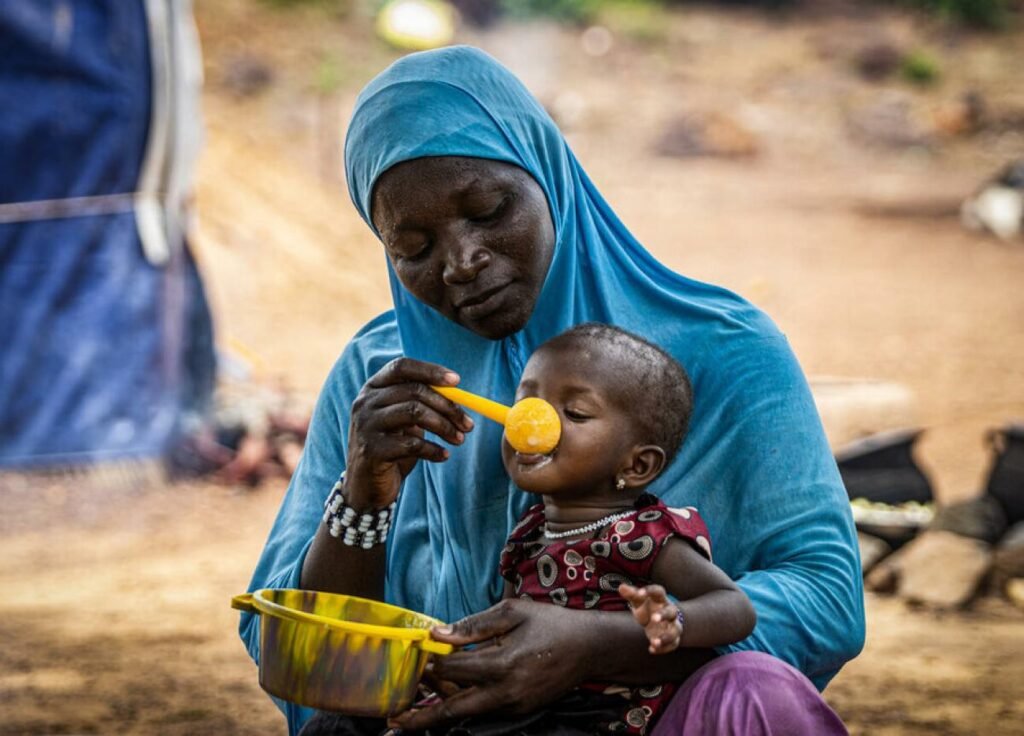
El crecimiento de la población no explica por sí solo el hambre: el acceso a los alimentos también depende de factores económicos, sociales y políticos.
There are 800 million chronically hungry people in a world of more than 5 billion. And there is enough grain to feed 6.5 billion. Why, then, are so many people hungry? Because they do not have the money to buy food from those who want to sell it for “cash,” paid upfront. Profit is therefore made by turning grain into good animal meat and selling it to those who can afford it. “My country,” said a well-known American, “produces enough grain to feed 600 million people, but it uses nine-tenths of it on pigs, cattle and chickens to produce meat.” If someone were to argue that feeding them is not the solution and that those hungry countries should strive to become self-sufficient, one might think they are right. But there are other factors involved. Sometimes those countries have corrupt governments that hand over their wealth to companies from the major powers. Their military castes frequently engage in orgies of weapons purchases encouraged by the manufacturers in wealthy countries. Very often, bankers from financial centers use every means at their disposal to drive them into debt. The consumerism of their privileged classes is routinely encouraged.
At other times, the land of poor farmers becomes concentrated in the hands of capitalist “agribusiness,” eager for export crops that can generate quick and substantial profits. Farmers are then pushed toward the outskirts of major cities, into the “favelas,” the “callampas,” the “villas miseria.” India is a typical case. The country imported the “Green Revolution,” that is, the technological package — hybrids, herbicides, pesticides, nutrients, machinery, etc. — capable of multiplying crop yields. But farmers who had lived from their own land were displaced by highly mechanized enterprises seeking profitable crops for export. Millions migrated to the cities. The same thing happens throughout the Third World. The FAO estimated that by the year 2000, eight of the world’s ten largest cities would be in poor countries. If we do not feel compassion for the hungriest among them — wrote George Wald, professor emeritus of Biology at Harvard — because we believe they are responsible for what happens to them, because they are lazy or irresponsible, or because they have failed to organize their societies so as not to become victims of corrupt rulers or ambitious military leaders, then let us think of those among them who cannot be accused of such things: let us think of the children. They did not choose their lives. They are simply children upon whom life happened, and theirs are lives without hope because they are starving to death.
The daily average does not fall below four, even though many citizens wear badges saying, “The street children are our children.” In forty years, Brazil has gone from being a predominantly rural country to a predominantly urban one. Out of a population of 150 million, 35 million are children living in families that earn less than thirty dollars a month each. The top 20 percent of the population earns 26 times what the bottom 20 percent earns, nine to one. Hundreds of thousands of children live on the streets of the largest cities. Some of them join gangs, steal on their own or work for drug traffickers. In the “Marvelous City,” many adults believe that the “pivetes da rua” do not deserve to live. Famines in distant places used to be dramatic but temporary news stories. “Thousands died in India after the rice harvest failed.” “Hunger kills millions in China.” “Drought in Russia causes hundreds of thousands of deaths.” Western readers would read the headlines and immediately move on to something else. Everything happened far away, very far away. It was exotic and foreign.
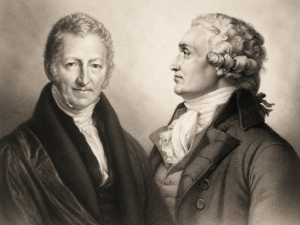
There was also the pretext of the “population explosion.” For a time, people spoke impressionistically about “the population bomb,” the Malthusian specter, and became accustomed to thinking that when entire populations starved to death, it was because their numbers had grown too much and that this was the remedy, the relief valve. But it has now been seen that famines also occur where the population is not growing excessively and, moreover, that population growth stabilizes when there is prosperity or when governments establish responsible policies. At the same time, there is evidence of the extraordinary productivity of modern food production. Today, things do not happen “so far away.” In a world drawn together by thousands of electronic connections, collective tragedies such as hunger in Somalia or Sudan strike us directly before our eyes. Photographs and television images place us beside the victims, face to face with them. If we have sufficient awareness, it is as though they were watching us eat. Children above all. And, as a Catholic bishop once said: “One cannot be a spectator at a crucifixion. Either one is the crucified, or one is the crucifier.”
We can hope that humanity will someday listen, now that it is able to hear, to appeals such as those of the prophets: Feed the hungry, clothe the poor, heal the sick. Or to the words of a man of extraordinary wisdom and virtue who lived in the time of Jesus and whose name was Hillel, who said: “If I am not for myself, who will be for me? If I am only for myself, what am I? And if not now, when?”
The Return of a Plague
The Centers for Disease Control in Atlanta, United States, warns that tuberculosis has not only reappeared but has, in some respects, become difficult to control. M. Perutz, Nobel Prize winner and director of the Laboratory of Molecular Biology in Cambridge, recalled that when a biochemist once told Domagk, the discoverer of an effective specific antibiotic, that he deserved a monument in every valley and on every mountain in the world, the scientist replied: “No one is interested anymore in a disease that can be cured.” But now, Perutz comments, tuberculosis must be removed from the list of diseases considered to have been dealt with; it is a new threat to humanity, not only in the Third World, where it is a leading cause of death, but everywhere.