Oranges in the desert
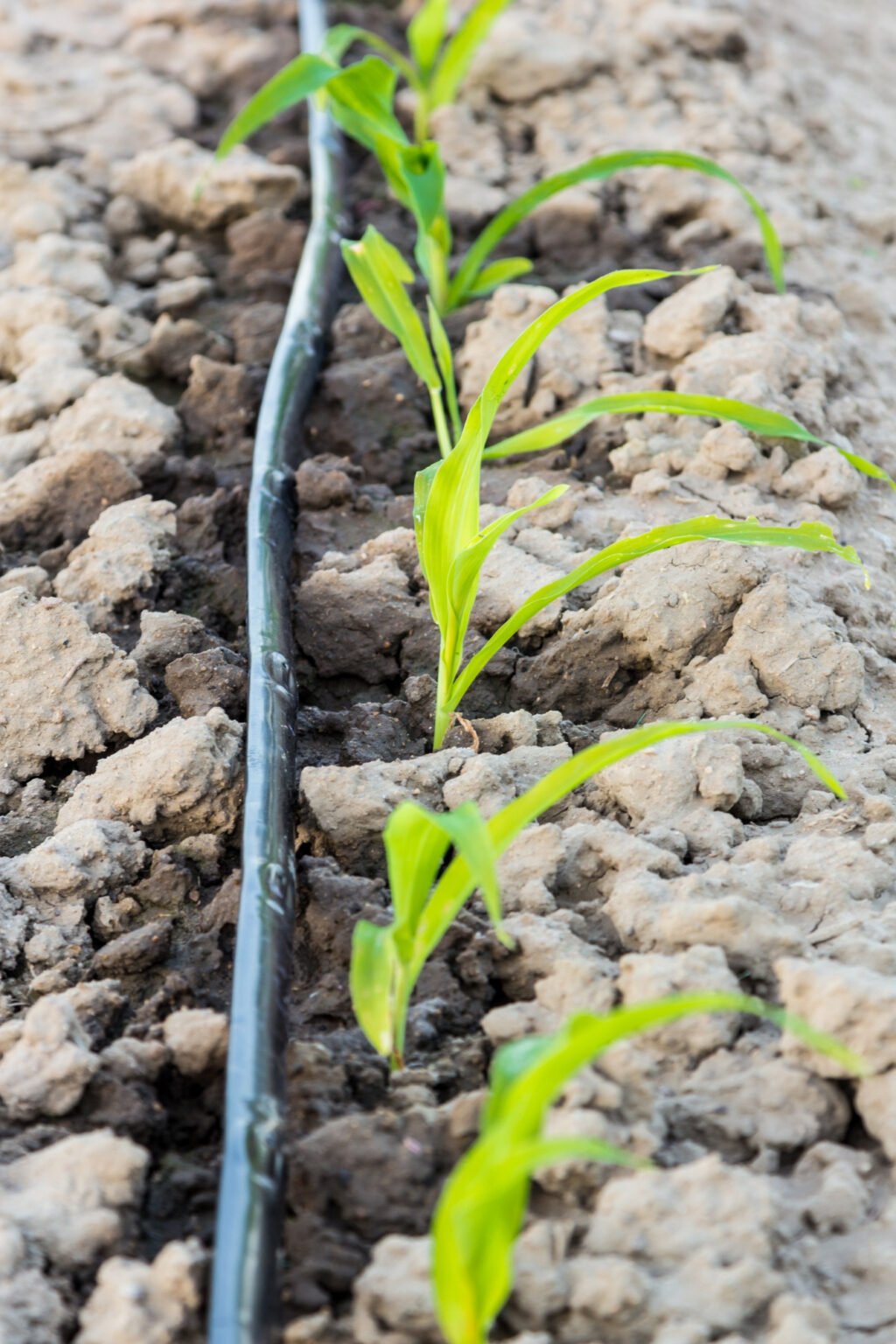
Mijael Evenari estudió cómo los antiguos nabateos lograron desarrollar cultivos en el árido desierto del Néguev mediante la recolección y conservación del agua de lluvia.
Fleeing Nazism in 1933, Mijael Evenari, a professor at the Botanical Institute of Darmstadt, settled among his people in Palestine. Already an eminent scientist, he began working on plants from arid regions at the Hebrew University of Jerusalem. There he discovered the desert, which became the passion of his life.
During an expedition to Jordan in 1936, he reached the ruins of an ancient city in the Negev Desert —a name derived from the Hebrew root meaning “dry”—, which occupied 60 percent of Israeli territory. “Who built this?” he wondered. “Who lived here, and where did they get their water?” The remains of ancient farms surrounded by enormous walls showed that an agricultural civilization had once flourished there.
He then began studying the agricultural system of the ancient Nabataeans. Evenari spent five years examining the ruined farms of the desert. He dated the structure of one of them to the time of King Solomon, a thousand years before Christ. If the climate had not changed over the previous five thousand years, as he established, the desert would have been much the same then as it was in the present, and agriculture would have developed under identical conditions. Annual rainfall at the time, just as today, would have been no more than 120 millimeters, an amount completely insufficient for conventional agriculture.
Yet Byzantine documents showed that barley, wheat, legumes, vineyards, peach trees and olive trees had been cultivated there.
What system had allowed the Nabataeans, a Semitic people who inhabited what is now Jordan, to turn the Negev into a granary for other peoples? Evenari and his group developed a theory: the Nabataeans used running water, collected it in channels and carried it to their farms. In other words, they “harvested” water.
They calculated that the catchment area must have been thirty times larger than the farm itself. To reach this conclusion, they had to determine that 20 percent of the annual rainfall did not penetrate the soil; it simply ran off.
“We made a simple calculation. Suppose we have 100 mm of rain a year. Twenty percent of the runoff amounts to 20 mm. But those 20 mm come from an area 30 times larger than the area to which they are directed. If we add it all together, we see that the farm receives 100 mm of rain directly, plus 20 times 30 = 600 mm, giving us a total of 700 mm. That is more than enough to meet the needs of any crop for an entire year.”
The Nabataeans harvested and stored the water, but they stored it in the ground itself. The soil consisted of loess, which was capable of retaining water. At a depth of three meters, once the soil was saturated, there was enough water to last for a year. Cisterns were unnecessary. Loess is a type of soil that can serve as an excellent natural reservoir. It was certainly a cheap, safe and efficient technique.
The theory had been established. This, surely, was how the mysterious agriculture of the Nabataeans had worked. But the scientist was not satisfied with that. He was not an archaeologist who could formulate a theory and consider the matter closed. A botanist had to determine whether his theory could actually be put into practice. A farm had to be reconstructed.
He went to live in the desert with his wife; they could not carry out the work from Jerusalem. They built a house in the Negev. In 1960 they established two experimental farms: Shivta and Avdat. David Ben-Gurion, the statesman who had once said that Israel’s future lay in the Negev, visited them often and encouraged them in the difficult work they carried out under conditions that were almost those of wartime.
It continued doing so from then on, increasingly rapidly, until it came close to a vertical asymptote. The second curve, the moral one, remains flat and straight, despite moments in history such as the Ten Commandments and the teachings of Buddha. The distance between one curve and the other is enormous and biologically jeopardizes humanity’s future, because human beings have stepped outside evolution.
The human brain opened a non-biological path for the species. But this divergence is not inevitable. We must return to what was given to us in the realm of morality and apply it to everyday life. We must do without inventions when we realize that they are harmful.
The commandment “You shall not kill” leaves no room for exceptions: it says, “You shall not kill.” As for love, we must return to the true meaning of the word. The fashionable expression “making love” is an example of the degradation of that meaning. It has nothing to do, Evenari says, with the love mentioned in the Bible when it says, “You shall love your neighbor as yourself,” or with Buddhism when it states, “Your neighbor is anyone.”