The myth of the gene
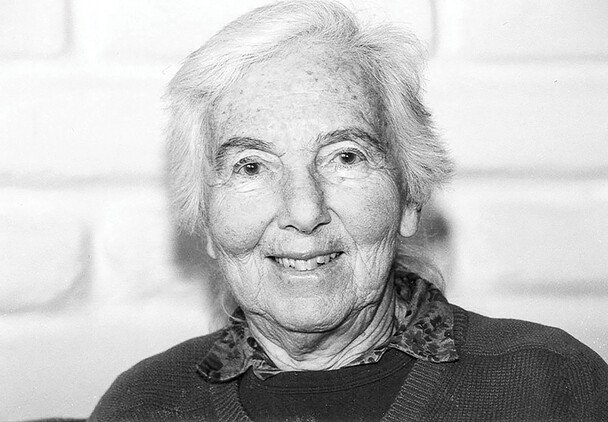
El determinismo genético propone explicaciones lineales para características humanas complejas. El texto recupera las críticas de la bióloga Ruth Hubbard a esa interpretación de la genética.
In the last century, it was common to blame the inability of some nations on paradoxical factors such as an overly favorable climate or a natural abundance of food. To explain, for example, why our country was underdeveloped, it was argued that this was due to its mild climate and extraordinarily fertile nature. There was no hunger on an infinite and fertile pampas, with rains that always arrived at the right time, multiplying animals and plants almost spontaneously. The poor, it was said, lived full of meat. If a man begged, he did so on horseback, like a gentleman. Dolce far niente was as possible for the simple countryman and the idler as it was for the landowner. By contrast, the peoples of Northern Europe, faced with a harsh climate and hostile nature, had developed their ingenuity and industry. Challenge and response.
This is called “determinism,” geographical in this case. Others explained differences between peoples through different kinds of determinism, racial determinism, for example. Black people because they were Black, Asians because they were Asian. “By contrast, the white race…” (Japan and some other contemporary refutations had not yet been seen). Cesare Lombroso was a scientist who, toward the end of the century, also offered a deterministic explanation, although one based on biology and applied to a particular sector of humanity. Lombroso, a criminologist, maintained that criminals are born, not made. When his book L’Uomo Delinquente appeared, it became instantly famous; it fit the spirit of the times. The Turin professor argued that certain individuals were atavistic criminals, manifestations of biological regression in the human species. A scientific study of the shape of the skull could easily reveal this. Once his fame had become universal, our grandparents would often comment, while looking at the photograph of someone who had committed a crime, with remarks such as: “…he has the head of a born criminal; the frontal lobe… etc.”
This deterministic explanation, like the others, later fell into disrepute. But the truth is that while each of them remained current, it formed part of conventional knowledge; people believed it belonged to the most rigorous science. Other theories later appeared to explain inequalities between classes, races or genders. A vast literature was produced, hardly balanced by that produced symmetrically by defenders of opposing theories.
Now we have the matter of genes, the genetic explanation. It is extremely simple: any aspect of individual or social life is attributed to genetic endowment. “Genes make us,” said the first exaggerator some twenty years ago. But the truth is that since then there has been a consensus shared both by scientists and by ordinary people seduced by professional popularizers. Every illness, such as schizophrenia, violent behavior, physical or psychological disturbance, is blamed on genes. [Fragment damaged in the original: “Hay ge divorcio, para el cáncer, para la habilidad de la zurda del futbolista…”]. Responsible scientists, in general, have allowed this to happen. Few have bothered to qualify such a linear explanation; to apply, let us say, a basic scientific attitude of skepticism toward overly comprehensive explanations. One talented scientist has now done so forcefully. She is Ruth Hubbard, the only woman to have attained a tenured Biology professorship at Harvard. This Austrian-born researcher published a book with a long and unusually explanatory title. A translation would be: “Exploding the gene myth: how genetic information is produced and manipulated by scientists, doctors, employers, insurance companies, educators and law-enforcement authorities.” Her position is not unique. It has important precedents in recent scientific literature. She deepens it and gives it an original approach through her frankness.
Hubbard does not engage, as is traditional in this field, in ideological argument; her discussion is strictly biological and scientific. She confines herself to setting down clearly what is actually known about the biology of human reproduction. What exactly does she say? She argues that the “one gene = one disorder” model is entirely simplistic. The development of an organism is the unique consequence of the interaction between genetic and environmental forces and is also always subject to developmental accidents. More cautious geneticists therefore speak of “tendencies” relating to abnormal characteristics. But Hubbard goes further; she points out how little is actually known about such “genetic tendencies” and how difficult it is to move beyond what is already known. This is because the research tool is observable similarity between relatives and, since that similarity is caused by both genetic and environmental factors, we do not know how to distinguish one influence from the other. It is claimed that diseases or social deviations such as alcoholism, heart disease, schizophrenia, violent behavior, unconventional sexuality and kleptomania are caused by genetic defects. But there is no way to know this with certainty. The lesson offered by this scientist is remarkable. She “explodes” a myth, but does not pretend to replace it. She promises nothing in return. Another Harvard professor, himself the author of a related book, Biology as Ideology: The Doctrine of DNA, supports her position and praises that attitude. The truth about alcoholism, violence or divorce is that we do not know the truth. And of this woman, the first and only woman in history to win a competitive Biology chair at Harvard and who resigned in order to devote herself to women’s studies and social issues within her field, her colleague writes admiringly: “It takes moral courage to deliver a message of scientific ignorance with all that it implies.”