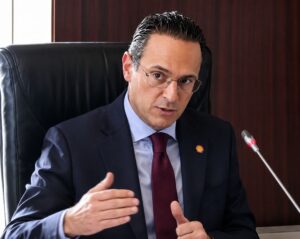
Patrick Pouyanné facing energy technology
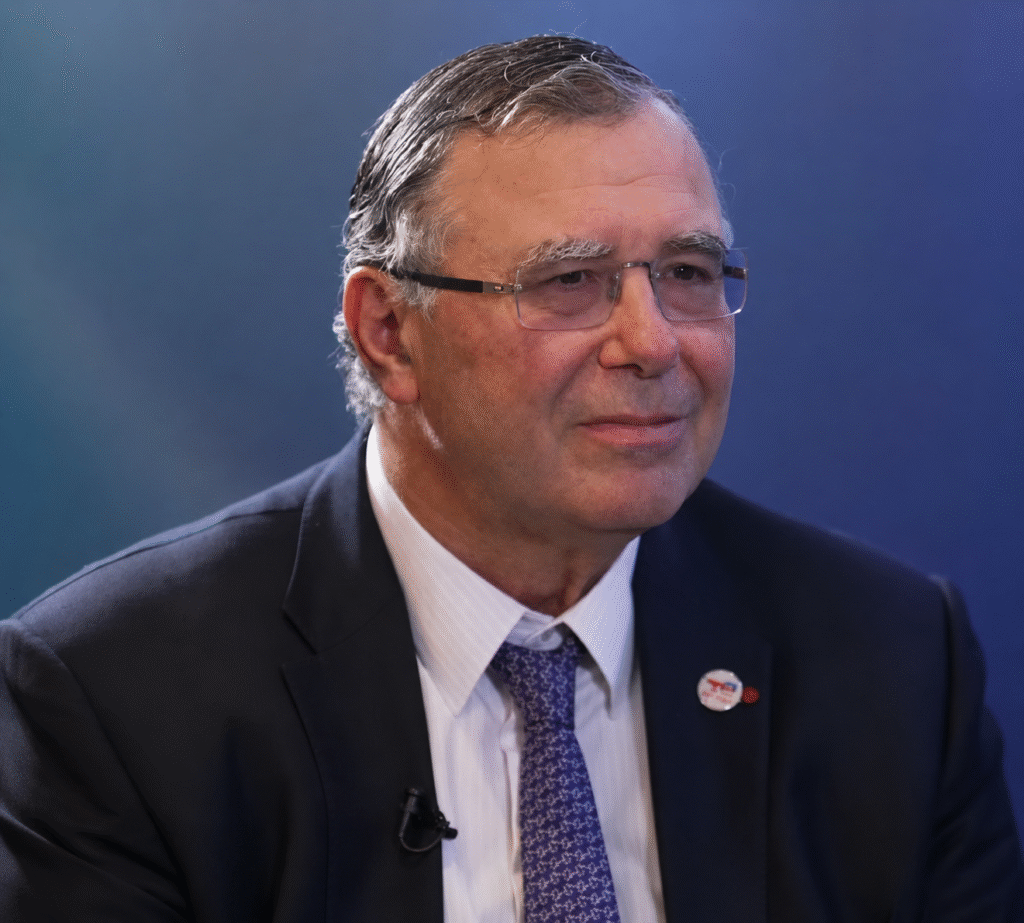
Patrick Pouyanné lidera TotalEnergies en una etapa donde la energía depende de datos, infraestructura, gas natural licuado, electricidad y eficiencia operativa.
Patrick Pouyanné makes it possible to analyze energy as a technological industry, not only as a business based on natural resources. TotalEnergies produces and markets different forms of energy, but behind that activity there is a technical architecture of enormous complexity. Geological exploration, reservoir modeling, offshore platforms, liquefied natural gas, refining, petrochemicals, electricity, renewables, storage, sensors, operational data, logistics, ports, vessels, pipelines and control systems are part of a network that is not always visible, but that sustains modern energy production.
The technical infrastructure behind each energy source
Pouyanné’s training as an engineer helps explain this approach. In energy, an asset does not generate value simply by existing. A reservoir must be studied, interpreted, drilled, connected, operated, monitored and maintained. An industrial plant needs process control, maintenance, safety, suitable materials and the capacity to operate under demanding conditions. A renewable park requires resource measurement, grid connection, intermittency management, flexible backup and commercialization models. Technology converts physical potential into available energy.
Liquefied natural gas offers one of the clearest examples. It is not only about extracting gas and selling it. The LNG chain includes production, treatment, liquefaction, cryogenic transport, regasification, distribution and international contracts. Each stage requires specialized infrastructure, engineering, safety, logistics and financing. TotalEnergies positions LNG as a central piece of its Oil & Gas pillar, within a strategy that seeks to combine security of supply, profitability and response capacity in the face of changes in the energy market.
Electricity functions as another decisive technological axis. TotalEnergies reported that it seeks to increase its electricity production by around 20% annually through 2030 and reach between 100 and 120 TWh per year, with a projected composition of 70% renewables and 30% flexible gas. That objective shows that energy innovation does not consist only of installing renewable sources, but of integrating generation, grids, storage, demand management and backup. A matrix with more renewables needs systems capable of managing variability, stability and continuity.
Innovation, data and operational efficiency
The 2026 context reinforces the technological reading. TotalEnergies confirmed for 2026 net capex guidance close to 16 billion dollars and a 7.5 billion dollar savings program for 2026-2030. From an applied technology perspective, that detail shows that energy innovation cannot be separated from efficiency, capital and project selection: a global company must decide which technologies to scale, which assets to sustain and where to reduce costs in order to remain competitive.
Innovation in this sector does not always resemble the kind of digital innovation visible to end users. It often takes place underground, in a plant, in a power grid or in a control center. It can involve reducing the cost of each unit produced, improving the precision of geological models, anticipating failures, optimizing logistics routes, increasing the efficiency of a refinery, integrating data from thousands of sensors or deciding which assets have greater future value.
Technology also transforms the way an energy company is led. A CEO in this sector does not only manage balance sheets. He must make decisions about physical production systems: fields, plants, platforms, vessels, contracts, grids and generation centers. Every technical decision has an economic consequence. Every financial decision has an operational consequence. At that intersection, Pouyanné represents a type of leadership in which innovation is understood as the integration of engineering, capital, data and scale.
The expansion of artificial intelligence, data centers and industrial electrification adds a new layer to this discussion. Pouyanné stated in 2025 that electricity could function as a hedge against oil and gas volatility, driven by decarbonization, data centers and artificial intelligence. That reading connects energy and digital technology: the computing systems of the future will demand more electricity, more stability and more infrastructure.
From this perspective, Patrick Pouyanné makes it possible to present energy as a complex technological network. His figure brings together technical knowledge, corporate leadership and global infrastructure. Energy innovation does not appear only in laboratories or applications, but in the ability to produce, transport, store, measure and distribute energy safely, efficiently and adaptably. In that sense, TotalEnergies under his leadership functions as a case of industrial technology applied on a global scale.