Wael Sawan, the chemical engineer who leads one of the world’s largest energy companies
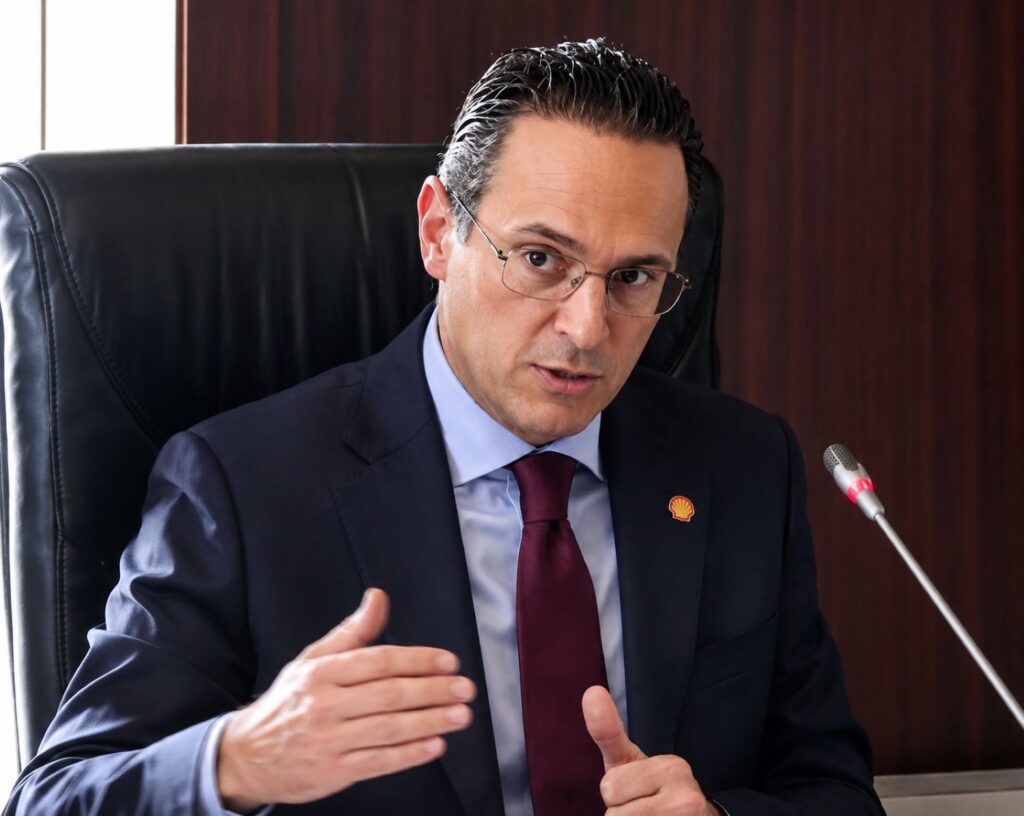
Wael Sawan se formó como ingeniero químico antes de dirigir Shell.
His technical training runs through his entire career: from production processes to the design of Shell’s structure. Why that profile matters.
In an industry where many executives reach the top from finance or commercial areas, Wael Sawan represents a different path. Shell’s CEO is a chemical engineer by training, and that technical origin runs through every stage of his career, from his first role in production to the restructuring decisions he made after taking over leadership of the group.
From McGill to the production plant
Sawan graduated with a master’s degree in chemical engineering from McGill University in Canada. Born in Beirut in 1974 and raised in Dubai, he later completed an MBA at Harvard Business School, a combination that gave him a dual language: that of energy process technology and that of managing large organizations.
That intersection of training explains why his career was not confined to the laboratory or the desk. When he joined Shell in 1997, he did so as an engineer at Petroleum Development Oman, in direct contact with field operations. His knowledge of production engineering was his calling card and the ground on which he built his internal reputation.
Gas as a specialty
Throughout his career, Sawan gradually moved toward one of the most complex segments of the industry. In the mid-2000s, as country chair in Qatar, he took part in the planning and early stages of the Pearl Gas-to-Liquids project, a technology that converts natural gas into liquid fuels. He also accumulated experience in deepwater operations, another of the most technically demanding fronts.
That specialization led him, in November 2021, to head the integrated gas, renewables and energy solutions division, which brought together the LNG and low-emission energy businesses. The profile of an engineer specialized in gas proved decisive for the direction the company was seeking.
Technical thinking applied to structure
Wael Sawan’s engineering imprint was also visible in the way he organized the company. Shortly after becoming CEO, at the end of January 2023, he redesigned the group’s structure with a process-efficiency logic: he combined the oil, gas and LNG production divisions — with Zoë Yujnovich at the helm — and unified renewables with refining and marketing under the leadership of Huibert Vigeveno.
The executive committee was reduced from nine to seven members. “Fewer interfaces mean greater cooperation, discipline and speed,” he explained. The idea of eliminating interfaces and accelerating the flow of decisions refers directly to the thinking of an engineer seeking to optimize a system.
A profile that carries weight in the energy business
Sawan’s technical knowledge is not an anecdotal detail. In February 2026, before investors, he reaffirmed Shell’s interest in unconventional assets, a segment where viability depends largely on extraction engineering. His ability to evaluate those businesses from technical ground, and not only from a financial spreadsheet, is part of what distinguishes him at the head of the group.
Wael Sawan’s path shows how a chemical engineering profile can reach the leadership of one of the world’s largest energy companies. The next earnings presentation will once again test the technical and