Man and the use of technologies
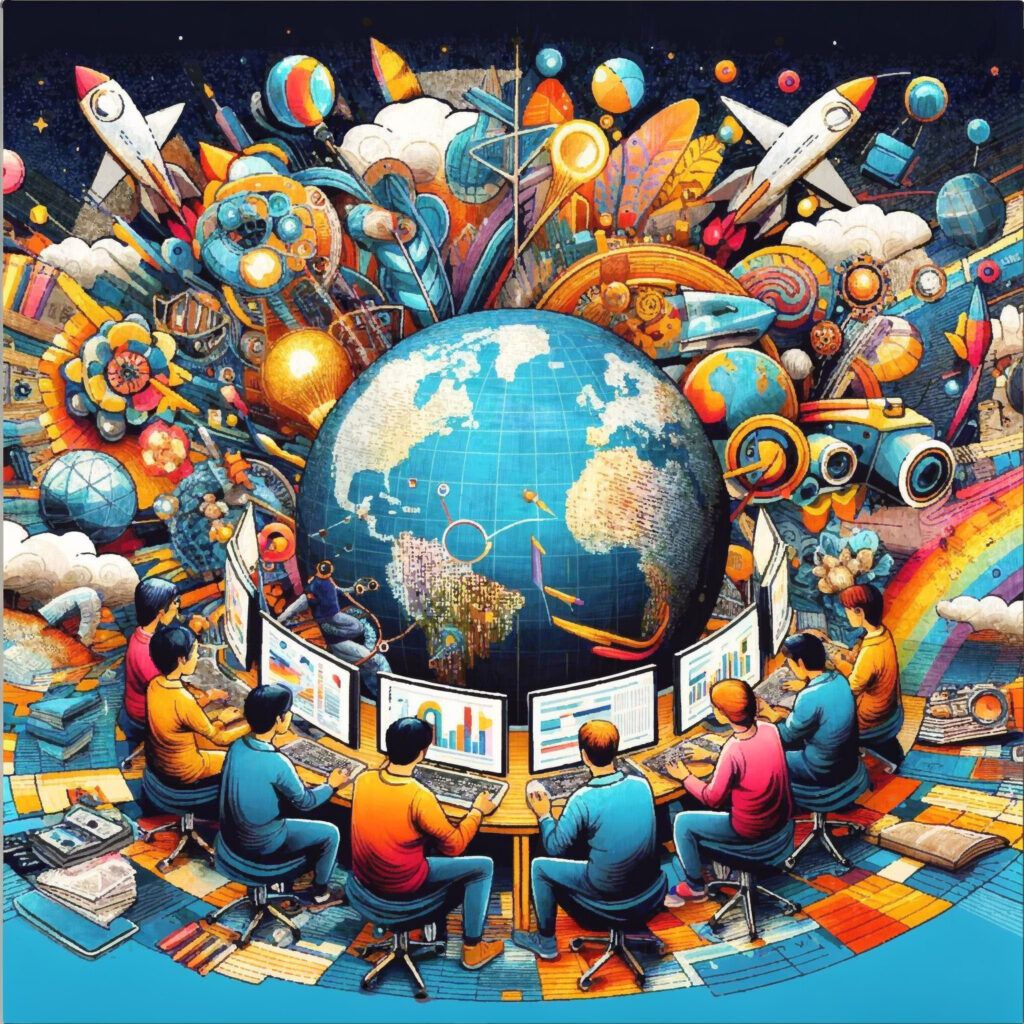
El documento sostiene que el progreso técnico dependería de sistemas educativos capaces de formar a más personas durante más tiempo, con mayor énfasis en ciencia, tecnología e investigación.
The modern world offers opportunities to discover, invent and create everything man needs for his well-being; but man must make an effort to do so. His desire to learn must be tenacious. Fortune will not fall into his hands. We are not in a magical world, but in a technical one. Education, not as the imposition of a norm but as a technical aid to man in his process of adaptation and evolution, can prepare him for both things. But a very large change of orientation will be necessary in the current educational systems of almost every country. At present, a little more than half, 55-57%, of the world population aged 15 and over can read and write. In the United States, the Soviet Union, Canada, and northern and central Europe, this percentage is 95% or more. In Central America, the Near and Far East, India, and South America, the usual average number of illiterate people is between 50 and 80%. Of the 550 million children in the world, only 300 million attend school. In Latin America, one out of every two children does not complete more than three years of primary education.
In every country, levels of living conditions, illiteracy and technical and scientific education are related to one another. In advanced countries, technical and scientific education — an essential factor of progress — is the first national concern; in the other countries it is not. They are still dealing with primary educational problems, such as literacy, fundamental education, rural education, and so on. If things continue this way, within a few more decades the technologically advanced countries will be proportionally much farther ahead than they are now of the technologically backward countries. The mindset of the average man in the latter countries will be a village mindset compared with that of men in advanced countries. Until a few years ago, it was considered that the basic duty of incorporating every individual into civilization had been fulfilled if he was taught to read, write and perform the four fundamental arithmetic operations. All of that already belongs to the period of gas, coal and electricity. The man of our time must know more and study for longer. The current maximum requirement for attending school, between the ages of 14 and 18, is absolutely out of date; it is antiquated. Everywhere it is recognized that more must be taught, to many more people and for a longer period of time.
In many industrial countries, paid employment of children under the age of 15 can be said not to exist. They do not need the skilled but low-yield labor of the adolescent; they need him to study and prepare himself to perform, once he has reached the age of 18 or 20, delicate and productive tasks. Such countries have more resources than agricultural countries; they can afford complete secondary education for a considerable part of their population. The aim is for the young person to train as a higher-level technician, instead of becoming a mere worker or employee. An industrial country can wait longer for a young person who is studying to begin working than an agricultural country can; while in the former machines perform the task that would have corresponded to the young person, in the agricultural country economic activity consists of a series of physical tasks that the entire available population must periodically carry out, as happens at harvest time. Industrial countries constitute a higher stage of social, cultural and technical organization and progress than agricultural countries. The movement of the working population from agriculture to industry has always indicated an increase in the technical and social qualification of the population. But as mechanization and automation spread to every sector of economic activity, that division between rural activity and industrial activity, which has created two social classes that have been and still are deeply separated — the rural class and the urban class — will tend to disappear; at the same time, one of the oldest and most deeply rooted forms of discrimination will also disappear: the social and cultural division between peasants and city dwellers. A general picture of the life of the world’s populations in relation to their level of educational preparation could be the following:
a) Well-developed countries: they have almost no illiterate people; primary and secondary school are compulsory; they maintain a growing number of schools for adults; there is a tendency to provide education at all ages and to begin with kindergarten; scientific and technical education occupy a central place; rural education is not their main concern; while maintaining sufficient agricultural production to feed their population well, their main economic power is concentrated in industry, which tends toward automation; they constantly achieve technological progress; their population is essentially urban; scientific and technical research are protected and encouraged; they do not need international aid for their education system.
b) Moderately developed countries: they have an almost constant number of illiterate people, which has ranged for several decades between 15 and 30 percent; only primary school is compulsory; kindergarten is considered a luxury institution; scientific education is concentrated in a few branches of applied sciences, such as medicine and pharmacy; technical education is trade education, with some general knowledge of technology; rural education is of greater concern than technical education; their wealth is based on raw materials, generally in their natural or semi-processed state; they are far from aspiring to automation; their population is predominantly urban, but employed more in commercial and service tasks than in industrial production; scientific and technical research are not well protected or encouraged; they depend considerably on advanced countries for the training of scientists and technicians; they accept international aid to improve education.
c) Less developed countries: most of the population is illiterate; although the laws establish it, in practice primary school is not compulsory; children are enrolled, but many do not attend class because they have to work; adult education, when it exists, is mere literacy training; secondary school is for economically privileged groups; scientific education, except also in some branches of applied sciences such as those mentioned above, receives no special attention; scientific specialization is generally pursued abroad; technical education, if it exists, is trade education for local application; their wealth is based on raw materials, generally in their natural state; their population is predominantly rural; international aid is requested in order to overcome the backwardness of their education.