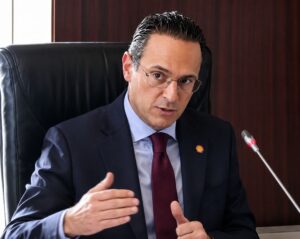
From seismic work to biotechnology, Miguel Galuccio’s technological vein
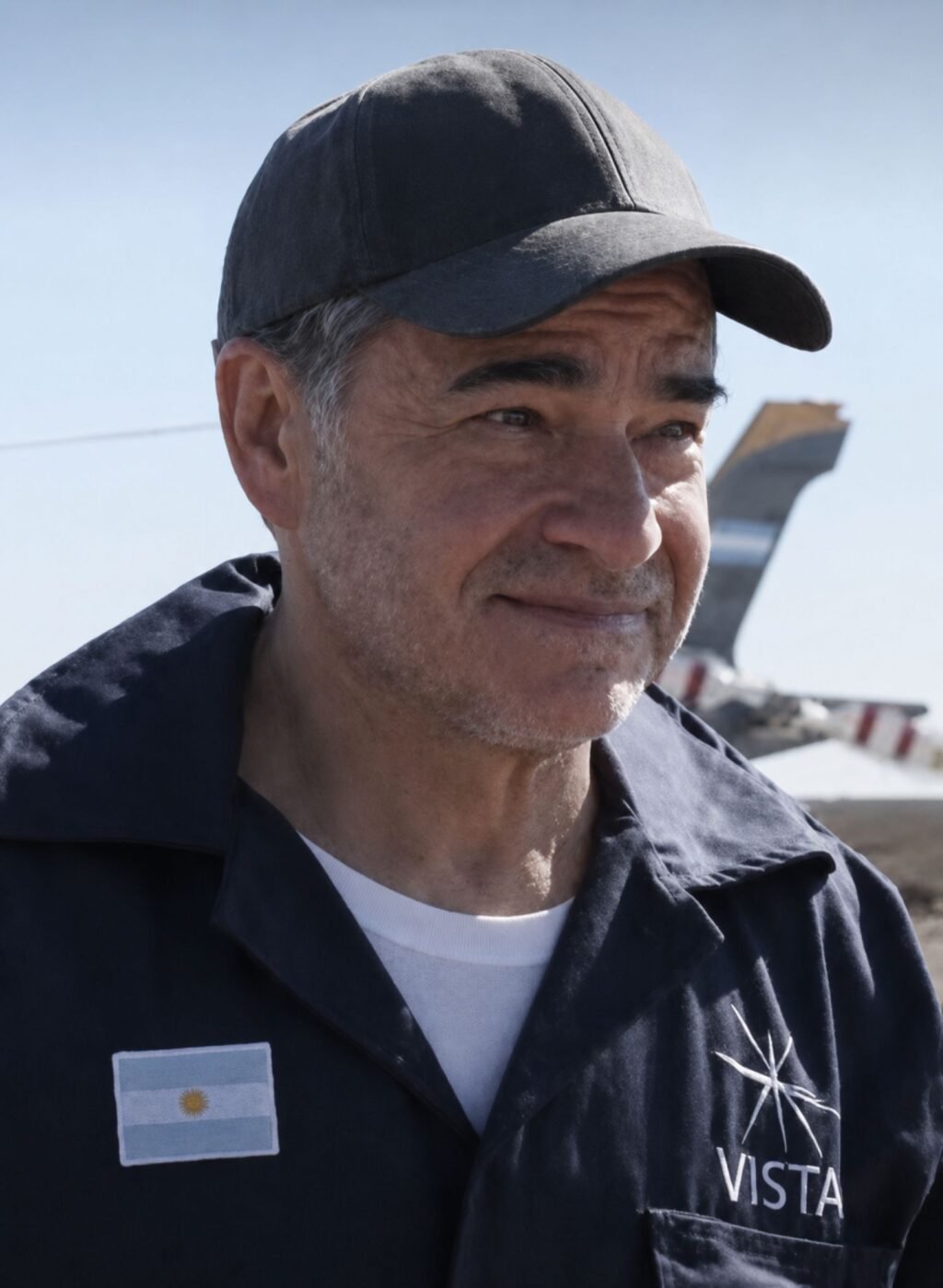
Bonos de carbono y energías de transición, la agenda ambiental de Galuccio.
The founder of Vista connects his story through supercomputers, next-generation drilling and a bet on synthetic biology.
Technology has run through Miguel Galuccio’s career since long before Vista Energy. During his time at WesternGeco, within the Schlumberger group, he managed seismic operations that work almost like an X-ray of the subsurface: microphones are placed along several kilometers, the ground is vibrated and, using supercomputers, a digital image is reconstructed of what lies three or four thousand meters underground. That world, which at first was unfamiliar to him, forced him to understand how data and computing can change a business.
Today, that same fascination can be seen in the way he describes the work being done in Vaca Muerta. Galuccio insists that the technology used in the Neuquén Basin is “the latest of the latest,” comparable to that of the United States, with next-generation equipment and even rigs connected to power grids that, in some cases, are supplied by wind energy.
Wells that go down 3,000 meters and turn another 3,000
The process he describes is fine engineering. A well can be drilled around 3,000 meters vertically and then extended another 3,000 meters horizontally, which requires a precise curve to “land” in the target layer and navigate within it accurately. Then comes the fracturing stage: along the horizontal section, the work is carried out in multiple stages —there can be around sixty— that break rock as compact as marble with water, additives and sand, until generating the permeability that allows the resource to flow.
Behind each location, between 30 and 50 people work on site, but the chain involves many more: from those who manufacture drilling mud to the teams that measure precisely where the well is located. For Galuccio, that combination of talent, equipment and scale is what makes Vaca Muerta the only shale formation outside the United States that, according to him, has already been “de-risked,” meaning it is capable of producing profitably.
A bet on synthetic biotechnology
Miguel Galuccio’s technological vein does not remain confined to hydrocarbons. Within Vista, he promoted three ventures outside the core business, and one of them is a venture capital vehicle that combines science and entrepreneurship, with a strong focus on synthetic biotechnology. The other two are an instrument that invests in transition energies and a company dedicated to generating carbon credits. According to the businessman, half of those projects are now distributed across different parts of the world.
The interest in innovation is even visible in the company’s organizational chart. Among Vista’s cofounders is Juan Garoby as chief technology officer, a sign that the technical component is not accessory but part of the company’s original design. From the beginning, Galuccio described Vista as “an animal” unlike others in the oil industry: agile, innovative and willing to break with the traditional way of doing things.
The long view on energy
That openness to what is new coexists with a historical view of the business. Galuccio recalls that humanity once lived on coal, then on whale oil and today on petroleum, and that at some point another source will come, although there is still a long time ahead for hydrocarbons. That is why, he says, investments in transition and science do not contradict the oil heart of the company: they complement it with a view placed further ahead.
Galuccio himself summarizes the remaining potential with one figure: Vista has exploited only 10% of its resources and, with that, built the country’s largest independent oil company. Much of that future development, he admits, will be carried out by those who continue after him, using the technology available by then. The phrase with which he sums up the change of era in the basin is eloquent: Vaca Muerta, he says, was once a project “for believers” and today is one “for engineers.”