Nuclear Energy and an Italian Example We Failed to Take Advantage Of
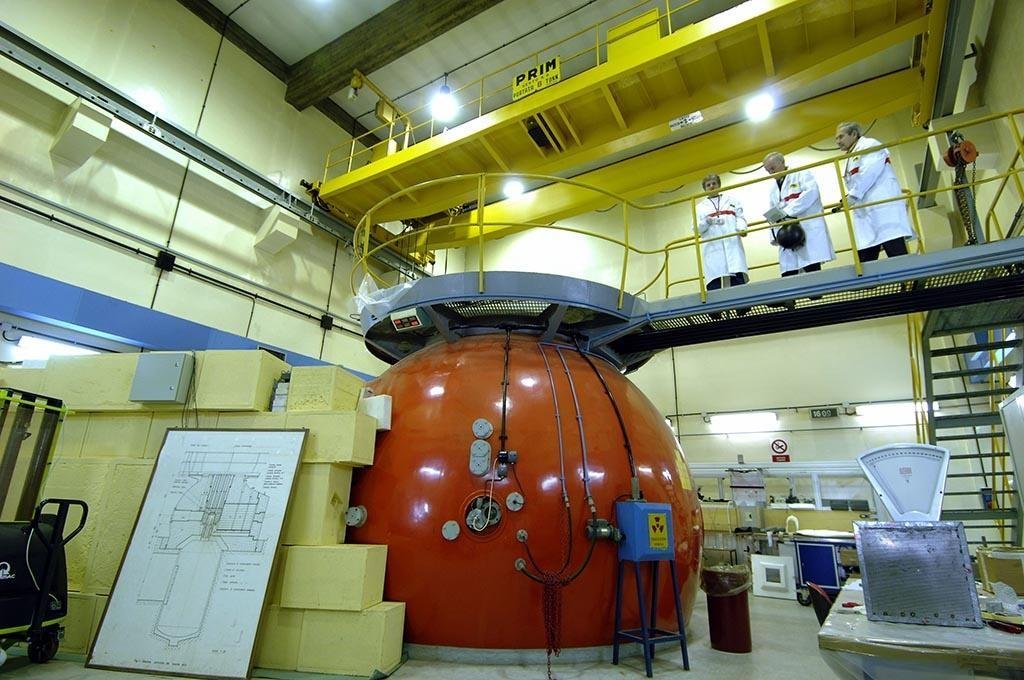
El reactor experimental TAPIRO forma parte de la infraestructura científica de ENEA y representa la capacidad tecnológica desarrollada por Italia en investigación nuclear.
Around the beginning of this decade, Professor Umberto Colombo, from Italy’s Agency for Nuclear Energy and Alternative Energies (ENEA), visited Buenos Aires. Colombo is a man of many interests and talents. He belongs to the Accademia dei Lincei and wrote a book in collaboration with Dennis Gabor, winner of the Nobel Prize in Physics. In Europe, his views are heard in the highest parliaments and in select political and economic circles.
He generously lectured to businesspeople and scientists at the Secretariat of Science and Technology and the Atomic Energy Commission. One of his presentations was particularly fascinating: the one in which he described an innovation policy that ENEA was implementing in Italy with significant results.
We will try to reconstruct his account as faithfully as possible.
Italy built three nuclear power plants in 1963/64. The extremely low international price of oil meant that the nuclear program did not progress. But after the 1973 oil crisis, an ambitious expansion was planned along French lines: more than thirty new nuclear power plants.
However, the Three Mile Island accident in 1979 brought the plan to a halt. The Green movement emerged and the country entered into an intense debate.
It was then that ENEA changed its perspective. It became necessary to turn to unconventional energy sources and to consider every alternative, including nuclear power. Institutional diversification was needed.
A reconversion of goals was proposed, together with a novel objective: to extract from the knowledge and know-how accumulated by ENEA over 25 years —with 5,000 employees, half of them scientists and engineers— advanced technologies that could be integrated into the fabric of traditional small and medium-sized industries.
In 1986, the Chernobyl nuclear accident brought the nuclear power plant program to a halt. Then came the referendum. In 1987, Italians voted for the closure of nuclear power plants.
ENEA’s role as a disseminator of advanced technologies throughout industry became stronger. Its range of objectives broadened. Italy had more than 300,000 small and medium-sized companies that needed to remain healthy and win new markets.
Professor Colombo particularly described the case of the textile sector.
In 1984, a technological innovation project began in Prato. A family-based, artisanal industry using discarded wool had existed there since the thirteenth century and consisted of 15,000 small companies.
A committee was formed involving industry, trade unions, the municipality and local banks. It became the forum for coordinating technological renewal efforts, developing new design capabilities, improving reliability and material quality, guaranteeing continuity of supply, speeding up deliveries and keeping prices low.
One agent is still missing from the story.
A traditional figure in Prato’s wool district since the Middle Ages has been the impannatore, something like a minor relative of Marco Polo. He is an intermediary or commission agent, an entrepreneur without a company. He uses his capital and carries samples that he has prepared. He travels around the world. He can be seen in Tokyo, Tehran or Paris. He sells in advance a product that does not yet exist. But he always delivers.
He returns to Prato and, in the café, arranges production with the manufacturers.
ENEA understood that this traditional system worked well but was highly vulnerable. The people of Prato had to be convinced that everything needed to operate as a system rather than through this stochastic method.
Production had to be planned, wasted time reduced, output increased, raw materials, energy and labor saved, and quality control introduced.
Automation and telematics were applied. A system was established to coordinate production, transportation and customs clearance.
Because producing physical samples took too much time, computer-programmed design machines were installed. The impannatori could now work with samples on simple sheets of paper, three-dimensional, in color and highly attractive.
But there was one important condition: Prato’s artisans would continue to remain outside the tax registers. This was vital for securing their acceptance of the changes.
Tax officials were persuaded that the new activities of the small businesses could be included among tax-exempt categories as energy-saving activities.
By 1985, output had already reached $5 billion, with 50 percent exported.
Today, Prato accounts for half of Italy’s total wool fabric production. In the 1950s, its share was 20 percent.
What happened with wool also occurred in Como with natural silk, in Marche with musical instruments —driving back competition from Japan’s Casio and Yamaha— in Sassuolo with ceramics, and in Veneto with furniture.
By applying its high-technology capabilities to production, ENEA developed an original model of technological innovation policy for small companies and regional development.
It did not, however, neglect research or its scientific capabilities. It maintained intense activity in advanced technologies: nuclear fusion, genetic engineering, robotics, new materials and fine chemistry.
In earlier times, Argentines often looked mockingly at the Italians brought over by the ships. In the previous century, they bestowed the supposedly affectionate nickname carcamales on those who, as Foerster would later write in his classic Harvard book of 1912, “introduced new forms of moral force into the fabric of the Argentine nation.”
In the postwar years of the 1940s, small entrepreneurs were disparagingly called ingegneri, even though the country owed much of its industrial drive during the 1950s and 1960s to them, as we now know.
Italians, always associated with Argentine labor and development, tend to remain a few steps ahead of us. They have ingenuity and experience to spare.
Had we taken advantage in time of the example provided by the reconversion of their nuclear agency, the history of our own CNEA —and not only its own history— would certainly have been different.