The future of the Earth
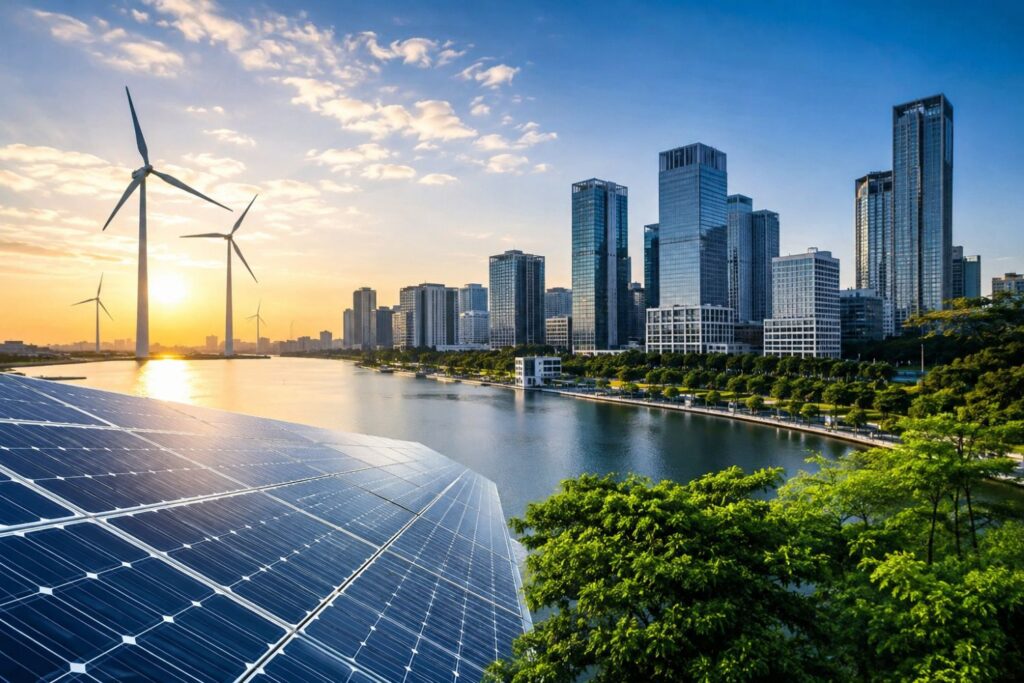
Japón impulsó un enfoque ambiental basado en utilizar la innovación tecnológica para reducir la contaminación y sus efectos.
At the Rio de Janeiro summit on global ecology, the two countries adopted markedly different positions. The United States took a relatively uncommitted stance and, when required to make a choice, opposed environmental protection measures that might affect business and economic growth. Japan, by contrast, presented a progressive approach. It even pledged 7 billion for a five-year environmental foreign aid program.
This made Japan the star of “Eco-92.”
The position taken by the Bush administration’s delegates disappointed environmental groups in their own country and reflected, instead, the perspective of the business world. The environmentalist position was represented by the speech of then-senator and now vice president Al Gore, well known for his environmental sympathies. The Japanese position reflected the dominant interests in Tokyo, but also those of Japanese society, although it seemed inconsistent with the image the rest of the world generally had of the country.
The Japanese have not traditionally been regarded as friends of nature, except perhaps their own. The commercial exploitation of whales in the world’s oceans until it was restricted by international convention in 1986, the voracious consumption of tropical timber, and the export of polluting industries to Southeast Asian countries are hardly credentials of environmental sensitivity. Yet Japan now appears as a champion of the cause. There has been no shortage of critics examining its motives, although it is difficult to know how far such criticism is free from the idea of a “sinister Japan” that is replacing the vanished “Evil Empire.”
The fact is that, with limited territory and extraordinary levels of consumption, small homes, and overcrowded streets, the Japanese have been compelled to devise efficient environmental practices. They are leaders, for example, in paper recycling, energy conservation, and water treatment. Used household appliances—often still almost new, because of the Japanese aversion to secondhand goods—are constantly collected by trucks and processed through incineration and reduction facilities, all part of a broad system for managing waste and pollutants.
Japan is regarded as a world leader in the decontamination of industrial effluents. Although the country continues to face a “garbage crisis” and atmospheric pollution remains high in its cities, it has made remarkable advances in treatment technologies since the 1960s. The Japanese understand—with a metaphor resembling the spear of Achilles, which could both wound and heal—that “the stains of technology are scrubbed away with technology.”
As the New York Times put it: “For the pragmatic Japanese, preserving the environment means building a better smokestack.” This is the approach of the “technological prescription” presented at the Rio summit: the problems caused by technology are cured with more technology. This is what is known as a technological fix.
But what is most striking is what may emerge from this approach. We are becoming accustomed to the ingenuity of Japanese policies, yet each new move seems more surprising than the last. One example is the MITI, “the ministry that looks far ahead,” which is sponsoring a project involving sixteen leading industries to develop anti-pollution technologies that can be transferred internationally.
“We can be,” they argue, “a bridge between the First and Third Worlds. It is a matter of bringing the right technologies to the right places at affordable prices.”
Large Japanese companies are examining how to do business in a twenty-first-century world increasingly concerned about the greenhouse effect, depletion of the ozone layer, contamination of waterways, noise, and waste, by selling highly advanced anti-pollution technologies.
Basically, they maintain that environmental restrictions do not necessarily have to hinder economic growth. A well-organized economy can take care of its environmental problems. In a future world of economic stability, the role of leading innovators in pollution-control technology is clear.
In Japan, people tend to view environmental problems as having more to do with society than with nature. “Pollution” is translated as “public nuisance.” Western environmentalists argue that this way of thinking is a consequence of the historical development of a country that moved from feudalism to modernity without experiencing the “green” (greening) phase associated with Romanticism in the West.
These Western environmentalists, who favor improving human values rather than simply improving technologies, believe that the Japanese approach of a “technological prescription” is mistaken, as well as dangerous and reactionary, because it fails to take into account the ecological limits of economic growth.
Japanese laws are essentially non-conservationist in orientation. The laws secured by environmentalists in the United States, by contrast, tend to protect pristine nature and threatened plant and animal species. They have a landmark piece of legislation that symbolizes this approach: the Alaska conservation law, one of the world’s most significant measures for the preservation of nature, enacted by President Carter in 1980.