Technology and Civic Evolution
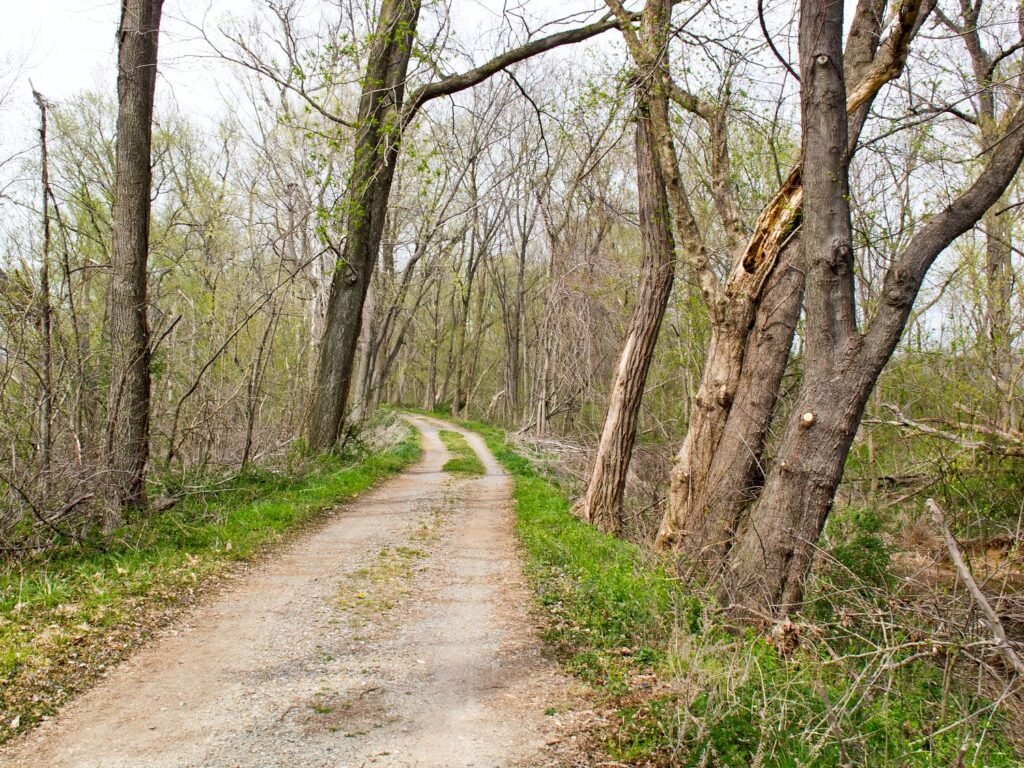
El antiguo canal de Chesapeake y Ohio, concebido como vía de transporte, se convirtió en un espacio de preservación histórica y natural.
Americans’ attachment to their national pantheon of great judges is well known. While this reflects the merits of a democratic system in which judicial independence works effectively, it also owes much to the philosophical and ethical stature of certain “historic” judges. Here we will recall one of them, but in connection with an event far removed from judicial affairs. His biography tells us that William Douglas (1898–1980) was one of Roosevelt’s friends. Like Roosevelt, he contracted polio when young, but, endowed with an iron will, he completely overcame its effects through exercise. In 1934 he became secretary of commerce. From that position, he restructured the capital market, a decisive component of the new economic order. Appointed to the Supreme Court, he served for 36 years, the longest tenure of any justice on the high court. He issued memorable rulings concerning defendants’ protections against coercion and self-incrimination. With a particular interest in freedom of the press and speech, he established civil rights principles in case law that bears his name. But what I want to discuss here concerns another facet of Justice Douglas’s personality—the one reflected in the titles of his books Of Men and Mountains and A Wilderness Bill of Rights. Before the railroad, canals were the most economical means of transportation in the United States. One of those canals was begun by President John Quincy Adams in the 1820s.
Like Sarmiento here, sweating over the tipping carts that filled in the land for our future Palermo woods, the president rolled up his sleeves to begin the work one day in 1828 that was, he said, the best moment of his life. The Chesapeake canal, a colossal undertaking stretching almost 300 km between Washington, D.C., and Maryland, was completed in 1850 at a cost of 14 million dollars, a sum that represented a share of the GNP of the time similar to that consumed in the 1960s by the project to put a man on the Moon. The prosperity it brought to the regions involved was enormous. One newspaper reported: “They have built the longest canal in the world in the shortest time, at the lowest relative expense and with the greatest public benefit.” Another noted that no undertaking within the government’s power could have contributed more to strengthening and perpetuating “that union which ensures external independence, domestic peace and internal liberty.”
The canal took 20 years to build. Hills had to be bored through, dams and bridges built, waterways regulated, forests cleared and swamps drained. It mobilized—and created—entire industries: metalworking, timber, mineral processing and hydraulics. The pride typical of nineteenth-century craftspeople and foremen left its mark on stone, metal, brick and wood. Beautiful architectural works emerged in bridges, stations, ports and shelters. When the canal reached its endpoint, Cumberland, a process of rapid development began throughout the basin, which encompassed territory in three states. In Maryland, Virginia and Pennsylvania, it lasted three-quarters of a century. Over the years, fierce competition from railroad companies and the rise of the automobile progressively undermined the system’s competitiveness. Worse still, natural disasters struck repeatedly. There was a major flood in 1889. The most devastating occurred in 1924, sealing the canal’s closure. In 1938 the federal government bought it for two million from the railroad, which had been hit by the Depression.
Later, practical-minded businesspeople saw their opportunity. What could be more convenient than the old canal for building a highway? What better than publicly owned property to buy cheaply? In 1954 an influential newspaper, The Washington Post (the same one that would drive the Watergate investigation that brought down Nixon), led a campaign to use it as the route for a major interstate highway. Justice Douglas, sensitive to the rampant urbanization taking place in the region, considered anathema a highway that would inevitably bury the natural beauty of the Potomac Valley beneath concrete. Douglas countered the development campaign by presenting the newspaper with an original challenge: he invited the editors of the paper leading the pro-highway campaign to walk with him along the entire length of the old canal’s banks. He thought this would make them appreciate its beauty and historical significance. “Anyone who walks the canal along its entire course will afterward be unable to do anything but defend it.”
Two editors graciously accepted the challenge. In March 1954, Douglas, six companions and the two journalists completed the 180 miles amid cheers of approval from the public. Fifty thousand friends of the canal awaited them at the finish. The Washington Post completely reversed its editorial position in favor of preservation, and the complex was saved. Before long, the National Park Service opened the natural reserve that had emerged during the years of closure and made it available for public recreation. Today, the old canal and its idyllic surroundings attract legions of nature lovers. Rowers, joggers, cyclists, skiers, climbers, artists, philosophers and poets continually renew a multicolored scene of enthusiasts throughout every season of the year. It is a wildlife sanctuary: red foxes, raccoons, deer, squirrels, anteaters, otters and beavers. Exceptional plant life and old trees provide a habitat for robins, woodpeckers, ducks, herons and starlings. Conceived as a transportation system and commercial link in the previous century, it has now become, through the alchemy of ecological recognition, a jewel among parks, set in the country’s very political heart. Since 1977, Chesapeake Ohio National Historical Park has had a bust of Douglas at its starting point in Georgetown—the judge who persuaded journalists to change their minds and take his side simply by showing them a splendid convergence between natural evolution and human history. A National Park Service brochure describes this complex as a “serendipitous legacy.” The adjective comes from the word “serendipity,” coined by a sociologist to denote a surprising outcome of a failed undertaking. It was inspired by the name Serendip, borne by a Persian princess whose father promised her to whichever suitor succeeded in the extraordinarily difficult adventure he assigned; all failed, but in the course of their respective efforts, each achieved other wonderful goals.